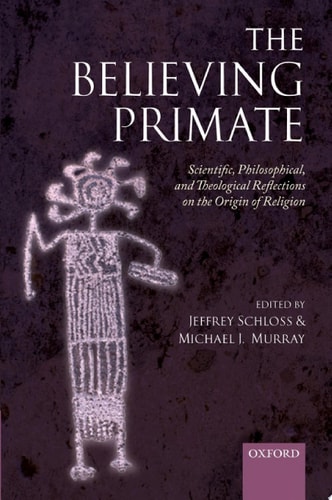
The Believing Primate: Scientific, Philosophical, and Theological Reflections on the Origin of Religion
0
0
As an Amazon Associate and affiliate partner, Menrva Books earns from qualifying purchases. Learn more
Author Description
Over the last two decades, scientific accounts of religion have received a great deal of scholarly and popular attention both because of their intrinsic interest and because they are widely seen as potentially constituting a threat to the religion they analyse. The Believing Primate aims to describe and discuss these scientific accounts as well as to assess their implications. The volume begins with essays by leading scientists in the field, describing these accounts and discussing evidence in their favour. Philosophical and theological reflections on these accounts follow, offered by leading philosophers, theologians, and scientists. This diverse group of scholars address some fascinating underlying questions: Do scientific accounts of religion undermine the justification of religious belief? Do such accounts show religion to be an accidental by-product of our evolutionary development? And, whilst we seem naturally disposed toward religion, would we fare better or worse without it? Bringing together dissenting perspectives, this provocative collection will serve to freshly illuminate ongoing debate on these perennial questions.
Menrva's Summary
THE THESIS
This volume investigates whether scientific explanations of the origins of religion inherently undermine the validity of religious belief or suggest that faith is merely an evolutionary byproduct. Editors Jeffrey P. Schloss and Michael Murray assemble a multidisciplinary team of scientists, philosophers, and theologians to evaluate the tension between evolutionary accounts of human belief and the truth claims of religious traditions. The text provides a structured framework for analyzing whether human cognitive predispositions toward religion necessitate a naturalistic reduction of spiritual experience.
THE SCOPE MAP
What You Will Find
- Scientific theories regarding the evolutionary origins of religious cognition
- Philosophical analysis of the relationship between evolutionary psychology and religious justification
- Theological responses to naturalistic explanations of faith
- Comparative perspectives on the utility of religion in human development
Scope Limits
- Does not provide a definitive empirical proof for or against the existence of a deity
- Does not focus on the sociological or political history of organized religion
THE AUTHORITY PERSPECTIVE
Scholars and students of the philosophy of religion frequently cite this collection as a balanced, high-level resource for navigating the intersection of cognitive science and theology. Experts highlight the text for its ability to maintain academic rigor while facilitating a constructive dialogue between traditionally opposing fields of study.
Page Count:
396
Publication Date:
2010-01-01
Publisher:
OUP Oxford
ISBN-10:
0191615803
ISBN-13:
9780191615801
Religion
History
Philosophy
Science
Linguistics
Theology
English
Cultural Anthropology
English & College Success
Religion
Evolutionary Biology
Community Tags
Similar Books