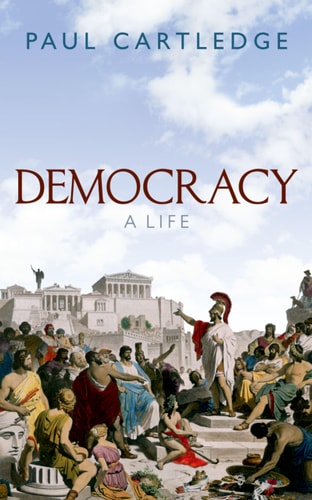
Democracy: A Life
0
0
As an Amazon Associate and affiliate partner, Menrva Books earns from qualifying purchases. Learn more
Author Description
Ancient Greece first coined the concept of "democracy," yet almost every major ancient Greek thinker--from Plato and Aristotle onwards--were ambivalent or even hostile to democracy in any form. The explanation is quite simple: the elite perceived majority power as tantamount to a dictatorship of the proletariat. In ancient Greece there can be traced not only the rudiments of modern democratic society but the entire Western tradition of anti-democratic thought. In Democracy: A Life, Paul Cartledge provides a detailed history of this ancient political system. In addition, by drawing out the salient differences between ancient and modern forms of democracy he enables a richer understanding of both. Cartledge contends that there is no one "ancient Greek democracy" as pure and simple as is often believed. Democracy surveys the emergence and development of Greek politics, the invention of political theory, and-intimately connected to the latter-the birth of democracy, first at Athens in c. 500 BCE and then at its greatest flourishing in the Greek world around 350 BCE. Cartledge then traces the decline of genuinely democratic Greek institutions at the hands of the Macedonians and--subsequently and decisively--the Romans. Authoritative and accessible, Democracy: A Life will be regarded as the best account of ancient democracy and its long afterlife
Menrva's Summary
THE THESIS
This book investigates the origins, evolution, and eventual decline of ancient Greek democracy while contrasting its unique structure with modern political systems. Paul Cartledge, a distinguished scholar of ancient history, utilizes primary source analysis and political theory to challenge the notion of a monolithic democratic tradition. He argues that the elite of the ancient world were largely hostile to majority rule, framing the development of democracy as a complex, contested process rather than a linear progression. By examining the transition from Athenian institutions to Roman dominance, the author provides a framework for understanding how the concept of democracy has been interpreted and manipulated across centuries.
THE SCOPE MAP
What You Will Find
- A historical analysis of the emergence of democracy in Athens circa 500 BCE.
- A comparative study highlighting the fundamental differences between ancient direct democracy and modern representative systems.
- An examination of the anti-democratic sentiments held by prominent thinkers such as Plato and Aristotle.
- A chronological account of the decline of democratic institutions under Macedonian and Roman influence.
THE AUTHORITY PERSPECTIVE
Experts recognize this work as a comprehensive and authoritative survey of the political landscape of the ancient world. Readers frequently note the academic rigor of the prose, which remains accessible to those interested in the historical foundations of modern political thought.
Page Count:
383
Publication Date:
2016-04-01
Publisher:
Oxford University Press, Incorporated
ISBN-10:
0199837465
ISBN-13:
9780199837465
Philosophy
History
Politics & Government
Democracy history
Ancient Greece
Community Tags
Other Editions(3)

Similar Books