The Aesthetic Commonplace: Wordsworth, Eliot, Wittgenstein, and the Language of Every Day
0
0
As an Amazon Associate and affiliate partner, Menrva Books earns from qualifying purchases. Learn more
Author Description
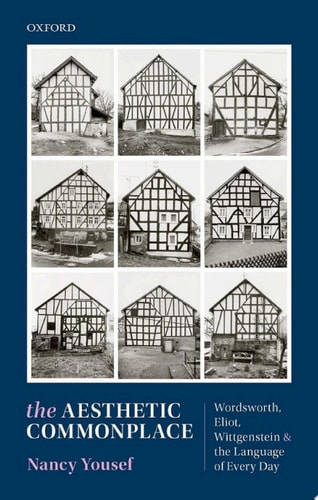
The Aesthetic Commonplace is a study of the everyday as a region of overlooked value in the work of William Wordsworth, George Eliot, and Ludwig Wittgenstein. The Romantic poet, the realist novelist, and the modern philosopher are each separately associated with a commitment to the common, the ordinary, and the everyday as a vital resource for reflection on language, on feeling, on ethical insight, and social attunement. The Aesthetic Commonplace is the first study to draw substantive lines of connection between Wittgenstein and the cultural and literary history of nineteenth century England. Tracing conceptual and formal affinities between the poet, the novelist, and the philosopher, the book brings to light significant links between the intellectual history of the nineteenth century and the early decades of the twentieth, making the case for a continuous cultural commitment to the aesthetic as a distinctive mode of investigating thought, feeling, and the everyday language upon which we depend for their articulation. Addressed to both literary studies and to philosophy, The Aesthetic Commonplace makes a compelling case for the interdependence of form, concept, and emotion in the history and interpretive practices of both disciplines.
Menrva's Summary
THE THESIS
This book investigates how the concept of the everyday serves as a critical site for ethical, linguistic, and social reflection across the works of William Wordsworth, George Eliot, and Ludwig Wittgenstein. Nancy Yousef, a scholar of Romanticism and nineteenth-century literature, employs a comparative framework to bridge the gap between literary form and philosophical inquiry. She argues that these three figures share a commitment to the ordinary as a vital resource for understanding human feeling and social attunement, ultimately proposing that the aesthetic functions as a rigorous mode of intellectual investigation.
THE SCOPE MAP
What You Will Find
- Comparative analysis of Romantic poetry, realist fiction, and modern analytic philosophy.
- A methodology that links nineteenth-century cultural history with early twentieth-century philosophical developments.
- Examination of how language shapes our understanding of emotion and ethical insight.
Scope Limits
- The study does not provide a comprehensive history of the concept of the everyday outside of the specific works of Wordsworth, Eliot, and Wittgenstein.
- It does not attempt to resolve broader debates in contemporary philosophy regarding the nature of consciousness.
THE AUTHORITY PERSPECTIVE
Scholars in both literary studies and philosophy recognize this work as a significant contribution to the interdisciplinary study of aesthetics and language. Readers frequently note the academic density of the prose, which is intended for an audience familiar with both literary theory and the philosophical tradition of Wittgenstein.
Page Count:
200
Publication Date:
2022-01-01
Publisher:
OUP Oxford
ISBN-10:
0192670379
ISBN-13:
9780192670373
Philosophy
History
Literary Criticism
Indigenous
Nineteenth century
Aesthetics
19th Century
Intellectual History
Community Tags
Similar Books