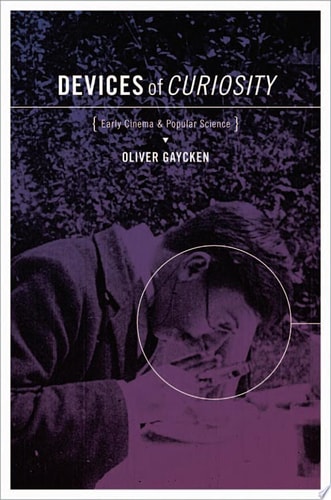
Devices of Curiosity: Early Cinema and Popular Science
0
0
As an Amazon Associate and affiliate partner, Menrva Books earns from qualifying purchases. Learn more
Author Description
Devices of Curiosity excavates a largely unknown genre of early cinema, the popular-science film. Primarily a work of cinema history, it also draws on the insights of the history of science. Beginning around 1903, a variety of producers made films about scientific topics for general audiences, inspired by a vision of cinema as an educational medium. This book traces the development of popular-science films over the first half of the silent era, from its beginnings in England to its flourishing in France around 1910.Devices of Curiosity also considers how popular-science films exemplify the circulation of knowledge. These films initially relied upon previous traditions such as the magic-lantern lecture for their representational strategies, and they continually had recourse to established visual iconography, but they also created novel visual paradigms and led to the creation of ambitious new film collections. Finally, the book discerns a transit between nonfictional and fictional modes, seeing affinities between popular-science films and certain aspects of fiction films, particularly Louis Feuillade's crime melodramas. This kind of circulation is important for an understanding of the wider relevance of early popular-science films, which impacted the formation of the documentary, educational, and avant-garde cinemas.
Menrva's Summary
THE THESIS
This book investigates the emergence and evolution of the popular-science film genre during the early silent era of cinema. Author Oliver Gaycken, a scholar of film and media history, utilizes archival research and historical analysis to argue that these films were not merely educational tools but active participants in the circulation of scientific knowledge. By examining the transition from magic-lantern traditions to the development of early documentary and avant-garde styles, the text provides a framework for understanding how scientific visual culture shaped the broader landscape of early twentieth-century cinema.
THE SCOPE MAP
What You Will Find
- Analysis of the development of popular-science films from 1903 through the 1910s.
- Examination of the visual strategies and iconography inherited from magic-lantern lectures.
- Comparative study of the intersections between non-fictional scientific films and fictional crime melodramas.
- Discussion of the influence of early scientific cinema on the formation of documentary and avant-garde film traditions.
THE AUTHORITY PERSPECTIVE
Scholars and film historians recognize this work as a significant contribution to the study of early non-fiction cinema. Readers frequently note the academic rigor and the depth of archival research presented in the text.
Page Count:
270
Publication Date:
2015-05-01
Publisher:
Oxford University Press
ISBN-10:
0199860688
ISBN-13:
9780199860685
Non-Fiction
Cinema History
Media Studies
Film Studies
Film Criticism
Community Tags
Other Editions(2)

Similar Books