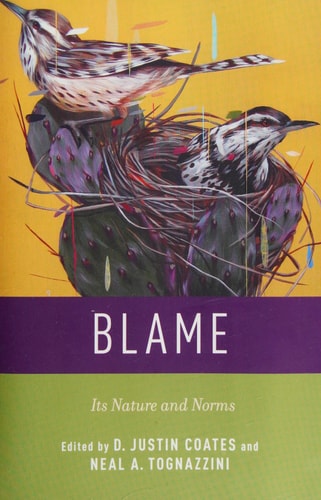
Blame: Its Nature and Norms
0
0
As an Amazon Associate and affiliate partner, Menrva Books earns from qualifying purchases. Learn more
Author Description
One mark of interpersonal relationships is a tendency to blame. But what precise evaluations and responses constitute blame? Is it most centrally a judgment, or is it an emotion, or something else? Does blame express a demand, or embody a protest, or does it simply mark an impaired relationship? What accounts for its force or sting, and how similar is it to punishment?The essays in this volume explore answers to these (and other) questions about the nature of blame, but they also explore the various norms that govern the propriety of blame. The traditional question is whether anyone ever deserves to be blamed, but the essays here provide a fresh perspective by focusing on blame from the blamer's perspective instead. Is our tendency to blame a vice, something we should work to replace with more humane ways of relating, or does it rather lie at the very heart of a commitment to morality? What can we legitimately expect of each other, and in general, what sort of attitude do would-be blamers need to have in order to have the standing to blame? Hypocritical or self-righteous blame seems objectionable, but why?The contributions to this volume aim to give us a fuller picture of the nature and norms of blame, and more generally of the promises and perils of membership in the human moral community.
Menrva's Summary
THE THESIS
This volume investigates the fundamental nature of blame and the normative constraints that govern its application within interpersonal relationships. The editors, D. Justin Coates and Neal A. Tognazzini, curate a collection of essays that examine whether blame functions primarily as a moral judgment, an emotional response, or a form of social protest. By shifting the focus from the blameworthiness of the target to the perspective of the blamer, the contributors analyze the moral standing required to hold others accountable and the potential pitfalls of self-righteous or hypocritical attitudes.
THE SCOPE MAP
What You Will Find
- Philosophical inquiry into the definitions and psychological components of blame.
- Analysis of the moral norms that dictate when and how blame is appropriate.
- Examination of the blamer's standing and the ethics of interpersonal expectations.
- Comparative study of blame in relation to punishment and moral community membership.
THE AUTHORITY PERSPECTIVE
Experts identify this collection as a significant contribution to contemporary moral philosophy, particularly for its focus on the blamer's perspective. Readers frequently note the academic density of the prose, making it a valuable resource for scholars and students of ethics.
Page Count:
332
Publication Date:
2012-12-27
Publisher:
Oxford University Press
ISBN-10:
0199860823
ISBN-13:
9780199860821
Non-Fiction
Philosophy
Blame
Conduct Of Life
Moral Philosophy
Criticism Personal
Ethics
Community Tags
Similar Books