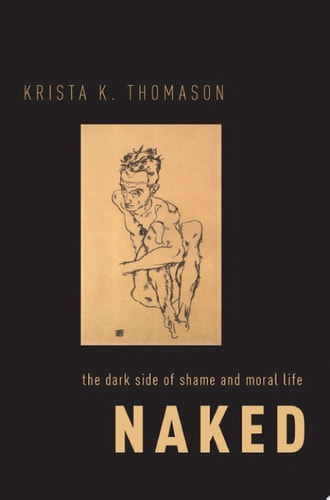
Naked: The Dark Side of Shame and Moral Life
0
0
As an Amazon Associate and affiliate partner, Menrva Books earns from qualifying purchases. Learn more
Author Description
We know shame can be a morally valuable emotion that helps us to realize when we fail to be the kinds of people we aspire to be. We feel shame when we fail to live up to the norms, standards, and ideals that we value as part of a virtuous life. But the lived reality of shame is far more complex and far darker than this -- the gut-level experience of shame that has little to do with failing to reach our ideals. We feel shame viscerally about nudity, sex, our bodies, and weaknesses or flaws that we can't control. Shame can cause self-destructive and violent behavior, and chronic shame can cause painful psychological damage. Is shame a valuable moral emotion, or would we be better off without it?In Naked, Krista K. Thomason takes a hard look at the reality of shame. The experience of it, she argues, involves a tension between identity and self-conception: namely, what causes me shame both overshadows me (my self-conception) and yet is me (my identity). We are liable to feelings of shame because we are not always who we take ourselves to be. Thomason extends her thought-provoking analysis to our current social and political landscape: shaming has increased dramatically because of the proliferation of social media platforms. And although these online shaming practices can be used in harmful ways, they can also root out those who express racist and sexist views, and enable marginalized groups to confront oppression. Is more and continued shaming therefore better, and is there moral promise in using shame in this way?Thomason grapples with these and numerous other questions. Her account of shame makes sense of its good and bad features, its numerous gradations and complexity, and ultimately of its essential place in our moral lives.
Menrva's Summary
THE THESIS
This book investigates whether shame functions as a constructive moral emotion or a destructive psychological force in human life. Krista K. Thomason, a philosopher specializing in moral psychology, examines the tension between identity and self-conception to explain why humans are susceptible to shame. She argues that shame is an inherent byproduct of the gap between who we are and who we believe ourselves to be, ultimately asserting that it occupies an essential, albeit complex, place in our moral landscape.
THE SCOPE MAP
What You Will Find
- Analysis of the psychological and visceral manifestations of shame
- Philosophical framework regarding identity versus self-conception
- Examination of digital shaming and its role in modern social and political discourse
- Evaluation of shame as a tool for confronting systemic oppression
Scope Limits
- The text does not provide clinical psychological treatment plans for chronic shame
- The analysis does not focus on historical anthropological origins of shame across all cultures
THE AUTHORITY PERSPECTIVE
Scholars and readers frequently note the philosophical rigor Thomason applies to a topic often relegated to self-help literature. Experts highlight this as a significant contribution to contemporary moral philosophy that successfully bridges the gap between abstract ethical theory and the lived reality of social media interaction.
Page Count:
256
Publication Date:
2018-02-01
Publisher:
Oxford University Press
ISBN-10:
0190843276
ISBN-13:
9780190843274
Psychology
Philosophy
Moral Philosophy
Social Science
Conduct Of Life
Ethics
Shame
Community Tags
Other Editions(2)
Similar Books