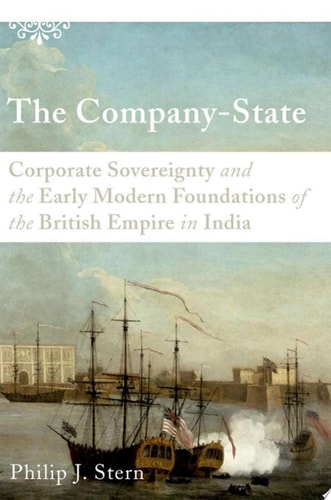
The Company-State
0
0
As an Amazon Associate and affiliate partner, Menrva Books earns from qualifying purchases. Learn more
Author Description
Almost Since The Event Itself In 1757, The English East India Company's Victory Over The Forces Of The Nawab Of Bengal And The Territorial Acquisitions That Followed Has Been Perceived As The Moment When The British Empire In India Was Born. Examining The Company's Political And Intellectual History In The Century Prior To This Supposed Transformation, The Company-state Rethinks This Narrative And The Nature Of The Early East India Company Itself. In This Book, Philip J. Stern Reveals The History Of A Corporation Concerned Not Simply With The Bottom Line But Also With The Science Of Colonial Governance. Stern Demonstrates How Company Leadership Wrestled With Typical Early Modern Problems Of Political Authority, Such As The Mutual Obligations Of Subjects And Rulers; The Relationships Among Law, Economy, And Sound Civil And Colonial Society; The Constitution Of Civic Institutions Ranging From Tax Collection And Religious Practice To Diplomacy And Warmaking; And The Nature Of Jurisdiction And Sovereignty Over People, Territory, And The Sea. Their Ideas Emerged From Abstract Ideological, Historical, And Philosophical Principles And From The Real-world Entanglements Of East India Company Employees And Governors With A Host Of Allies, Rivals, And Polyglot Populations In Their Overseas Plantations. As The Company Shaped This Colonial Polity, It Also Confronted Shifting Definitions Of State And Sovereignty Across Eurasia That Ultimately Laid The Groundwork For The Company's Incorporation Into The British Empire And State Through The Eighteenth Century. Challenging Traditional Distinctions Between The Commercial And Imperial Eras In British India, As Well As A Colonial Atlantic World And A Trading World Of Asia, The Company-state Offers A Unique Perspective On The Fragmented Nature Of State, Sovereignty, And Empire In The Early Modern World.
Menrva's Summary
THE THESIS
This book investigates how the English East India Company functioned as a political entity with sovereign authority long before its formal integration into the British Empire. Philip J. Stern, a historian specializing in early modern empire, utilizes archival records and political correspondence to argue that the Company was not merely a commercial enterprise but a complex governing body. He demonstrates that the Company actively engaged with contemporary theories of law, diplomacy, and civil society to manage its overseas territories. By analyzing the century preceding the 1757 victory at Bengal, Stern redefines the Company as a 'company-state' that navigated the shifting definitions of sovereignty in the early modern world.
THE SCOPE MAP
What You Will Find
- An analysis of the political and intellectual history of the East India Company from the 17th to the mid-18th century.
- Examination of governance mechanisms including tax collection, religious practice, and military diplomacy.
- Evidence drawn from primary source documents, administrative records, and the correspondence of Company governors.
- A framework for understanding the intersection of corporate interests and state-like sovereignty in colonial contexts.
THE AUTHORITY PERSPECTIVE
Scholars in the field of imperial history recognize this work as a significant contribution to the understanding of corporate sovereignty and early modern statecraft. Readers frequently note the academic density of the prose, which provides a rigorous examination of the Company's complex administrative evolution.
Page Count:
320
Publication Date:
2011-01-01
Publisher:
Oxford University Press, Incorporated
ISBN-10:
0199875189
ISBN-13:
9780199875184
History
Economic History
Colonialism
British Empire
East India Company
British Corporations
Asian History
Corporations india
Community Tags
Similar Books