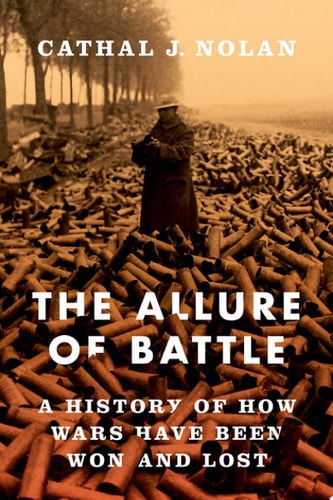
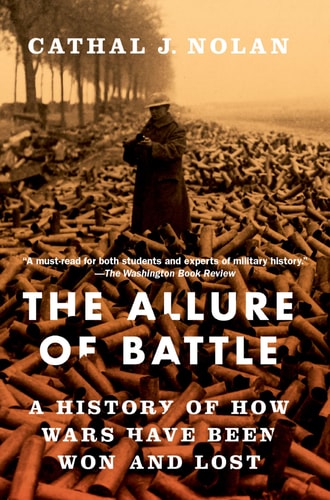
The Allure of Battle: A History of How Wars Have Been Won and Lost
0
0
As an Amazon Associate and affiliate partner, Menrva Books earns from qualifying purchases. Learn more
Author Description
History Has Tended To Measure War's Winners And Losers In Terms Of Its Major Engagements, Battles In Which The Result Was So Clear-cut That They Could Be Considered Decisive. Cannae, Konigsberg, Austerlitz, Midway, Agincourt-all Resonate In The Literature Of War And In Our Imaginations As Tide-turning. But These Legendary Battles May Or May Not Have Determined The Final Outcome Of The Wars In Which They Were Fought. Nor Has The Genius Of The So-called Great Captains - From Alexander The Great To Frederick The Great And Napoleon - Play A Major Role. Wars Are Decided In Other Ways. Cathal J. Nolan's The Allure Of Battle Systematically And Engrossingly Examines The Great Battles, Tracing What He Calls Short-war Thinking, The Hope That Victory Might Be Swift And Wars Brief. As He Proves Persuasively, However, Such Has Almost Never Been The Case. Even The Major Engagements Have Mainly Contributed To Victory Or Defeat By Accelerating The Erosion Of The Other Side's Defences. Massive Conflicts, The So-called People's Wars, Beginning With Napoleon And Continuing Until 1945, Have Consisted Of And Been Determined By Prolonged Stalemate And Attrition, Industrial Wars In Which The Determining Factor Has Been Not Military But Matériel. Nolan's Masterful Book Places Battles Squarely And Mercilessly Within The Context Of The Wider Conflict In Which They Took Place. In The Process It Help Corrects A Distorted View Of Battle's Role In War, Replacing Popular Images Of The Battles Of Annihilation With Somber Appreciation Of The Commitments And Human Sacrifices Made Throughout Centuries Of War Particularly Among The Great Powers. Accessible, Provocative, Exhaustive, And Illuminating, The Allure Of Battle Will Spark Fresh Debate About The History And Conduct Of Warfare.
Menrva's Summary
THE THESIS
Does the outcome of major historical battles truly determine the final result of a war, or is victory decided by other, more systemic factors? Cathal J. Nolan, a professor of history and executive director of the International History Institute at Boston University, challenges the traditional focus on 'decisive battles' and the genius of individual military commanders. By analyzing centuries of conflict, he argues that wars are rarely won through singular tactical brilliance but are instead determined by industrial capacity, attrition, and the ability to sustain prolonged human and material sacrifice.
THE SCOPE MAP
What You Will Find
- A comprehensive analysis of major historical conflicts from the Napoleonic era through the end of World War II.
- An examination of 'short-war thinking' and the persistent, often flawed, belief that military engagements can lead to swift victory.
- Extensive use of historical case studies to demonstrate the primacy of matériel and industrial logistics over battlefield tactics.
- A critical framework for understanding how attrition and the erosion of defenses define the actual trajectory of modern warfare.
THE AUTHORITY PERSPECTIVE
Historians and military analysts frequently cite this work for its rigorous challenge to the 'decisive battle' narrative that dominates popular military history. Readers often note the academic density of the prose, which provides a sobering and detailed look at the realities of industrial-scale conflict.
Page Count:
320
Publication Date:
2017-01-01
Publisher:
Oxford University Press, Incorporated
ISBN-10:
0199874654
ISBN-13:
9780199874651
History
Non-Fiction
War
Battles
Military History
Community Tags
Other Editions(3)
Similar Books

Reader Comments
Share Your Thoughts
No comments yet. Be the first to share your thoughts!