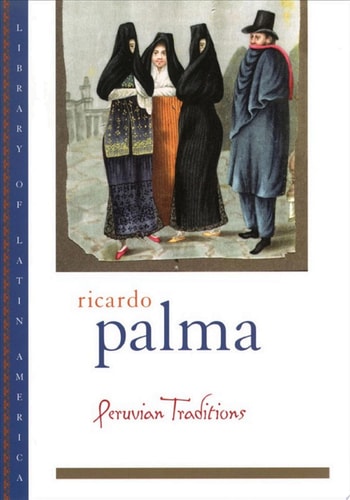
Peruvian Traditions (Library of Latin America)
0
0
As an Amazon Associate and affiliate partner, Menrva Books earns from qualifying purchases. Learn more
Author Description
Peruvian author Ricardo Palma (1838-1919) was one of the most popular and imitated writers in Latin America during the late nineteenth and early twentieth centuries. As head of the National Library in Lima, Palma had access to a rich source of historical books and manuscripts. His historical miscellanies, which he called "traditions," are witty anecdotes about conquerors, viceroys, corrupt and lovelorn friars, tragic loves and notorious characters. Humor, irony and word play characterize his collection of over five hundred traditions written between 1872 and 1906, whether describing violent deeds or amorous misadventures. Unlike many of his contemporaries in the second half of the nineteenth century, Palma did not write transparent didactic fictions and defend elite cultural forms. Rather, he reveled in ironic approaches to written sources, political authorities and church institutions as well as popular speech and knowledge. Both fiction and history, Palma's delightful Peruvian Traditions represents a hybrid literary form that constructs historical memory distinct from the dominant literary trends of the time.
Menrva's Summary
THE PULSE
Ricardo Palma captures the vibrant, often scandalous history of Peru through a series of witty, anecdotal vignettes that challenge traditional historical narratives. Palma utilizes his position as the director of the National Library in Lima to unearth forgotten manuscripts and oral histories, transforming them into a unique literary hybrid. His objective is to document the social and political life of colonial and post-colonial Peru, opposing the rigid, didactic styles of his contemporaries. The narrative framework is episodic and non-linear, relying on irony, humor, and a conversational tone to bridge the gap between documented history and popular legend.
INSIDE THE PAGES
- Use of ironic and satirical commentary on colonial authorities
- Integration of oral folklore and popular speech patterns
- Episodic structure featuring independent, short-form narratives
- Focus on historical figures including viceroys and friars
- Blending of factual historical records with imaginative storytelling
- Exploration of romantic misadventures and tragic love stories
- Frequent use of wordplay and linguistic wit
- Critique of institutional power structures within the church and state
THE COLLECTIVE ECHO
Readers and critics frequently highlight Palma's ability to humanize history by focusing on the eccentricities of notorious characters rather than dry dates. Discussion often centers on his invention of the 'tradition' as a genre, which successfully merges academic research with the accessibility of a campfire story. Many note that his work remains a foundational pillar of Latin American literature due to its refusal to adhere to the elite cultural norms of the nineteenth century. The balance of humor and historical insight ensures that the collection remains engaging for those interested in the cultural identity of Peru. Scholars often emphasize how his playful prose serves as a deliberate subversion of traditional historiography.
Page Count:
324
Publication Date:
2004-01-01
Publisher:
Oxford University Press
ISBN-10:
0199882770
ISBN-13:
9780199882779
Latin American
English
Essays
Legends peru
Historical
English & College Success
Short Stories
Folklore
Community Tags
Similar Books