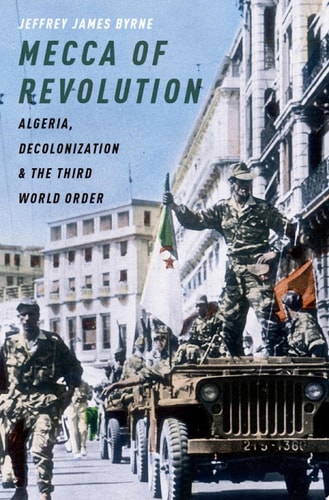
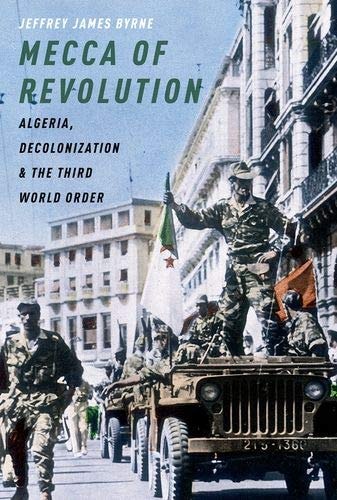
Mecca of Revolution
0
0
As an Amazon Associate and affiliate partner, Menrva Books earns from qualifying purchases. Learn more
Author Description
Mecca Of Revolution Traces The Ideological And Methodological Evolution Of The Algerian Revolution, Showing How An Anticolonial Nationalist Struggle Culminated In Independent Algeria's Ambitious Agenda To Reshape Not Only Its Own Society, But International Society Too. In This Work, Jeffrey James Byrne First Examines The Changing Politics And International Strategies Of The Algerian National Liberation Front (fln) During Its War With France, Including The Embrace Of More Encompassing Visions Of Decolonization That Necessitated Socio-economic Transformation On A Global Scale Along Marxist/leninist/fanonist/maoist/guevarian Lines. After Independence, The Algerians Played A Leading Role In Arab-african Affairs As Well As The Far-reaching Third World Project That Challenged Structural Inequalities In The International System And The World Economy, Including Initiatives Such As The Non-aligned Movement, The G77, And The Afro-asian Movement. At The Same Time, Algiers, Nicknamed The Mecca Of Revolution, Became A Key Nexus In An Intercontinental Transnational Network Of Liberation Movements, Revolutionaries, And Radical Groups Of Various Kinds. Drawing On Unprecedented Access To Archival Materials From The Fln, The Independent Algerian State, And Half A Dozen Other Countries, Byrne Narrates A Postcolonial, Or South-south, International History. He Situates Dominant Paradigms Such As The Cold War In The Larger Context Of Decolonization And Sheds New Light On The Relationships Between The Emergent Elites Of Africa, The Middle East, Asia, And Latin America. Mecca Of Revolution Shows How Third Worldism Evolved From A Subversive Transnational Phenomenon Into A Mode Of Elite Cooperation That Reinforced The Authority Of The Post-colonial State. In So Doing, The Third World Movement Played A Key Role In The Construction Of The Totalizing International Order Of The Late-twentieth Century.
Menrva's Summary
THE THESIS
How did the Algerian Revolution transform from a localized anticolonial struggle into a central architect of the twentieth-century international order? Jeffrey James Byrne, a scholar of international history, utilizes extensive archival research from the FLN and multiple international sources to map the evolution of Algerian foreign policy. He argues that the Algerian state, through its commitment to Third Worldism, sought to reshape global economic and political structures by fostering transnational networks of revolutionary movements and elite cooperation.
THE SCOPE MAP
What You Will Find
- Analysis of the ideological shift within the FLN toward Marxist, Leninist, and Fanonist frameworks.
- Examination of Algiers as a strategic nexus for global liberation movements and radical groups.
- Historical documentation of the Non-Aligned Movement, the G77, and the Afro-Asian Movement.
- A study of the transition from subversive transnational activism to the consolidation of post-colonial state authority.
THE AUTHORITY PERSPECTIVE
Scholars recognize this work as a significant contribution to the study of South-South international relations and the history of decolonization. The text is noted for its rigorous use of previously inaccessible archival materials to provide a comprehensive view of Algeria's role in the global political landscape.
Page Count:
336
Publication Date:
2016-01-01
Publisher:
Oxford University Press
ISBN-10:
0199899150
ISBN-13:
9780199899159
History
African history
International relations
Community Tags
Other Editions(2)
Similar Books



Reader Comments
Share Your Thoughts
No comments yet. Be the first to share your thoughts!