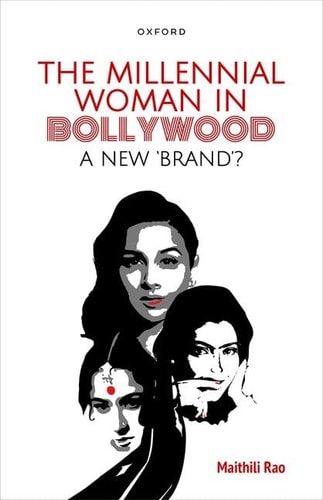
The Millennial Woman in Bollywood: A New 'Brand'?
0
0
As an Amazon Associate and affiliate partner, Menrva Books earns from qualifying purchases. Learn more
Author Description
With the turn of the century, slowly a change began to come over the women in mainstream Bollywood films. The female lead shed-off her cardboard role of the beloved and gained complexity that reconciled career, ambition, and personal fulfillment, along with an assertion of the right to be feminine. The present work studies this shift and traces the emergence of a new Bollywood brand - the millennial woman - that took its cue from a new globalized India where the educated working woman became more self-assertive and unapologetic about her life choices. Rao argues that contemporary popular cinema has sensed a change in the zeitgeist and worked it into trusted formulaic stories in small safe doses so that the audience continue to take home a feel-good factor without feeling threatened by it. While the success of early films like 'Chandni Bar' (2001), 'Page 3' (2005), and 'Fashion' (2008) with female protagonists emboldened filmmakers and their financiers to venture into a territory previously considered box office poison, the reinvention of the classics by a band of subversive and irreverent filmmakers such as Anurag Kashyap and Tigmanshu Dhulia gave a hospitable home to the new woman in 'Dev D' (2009) and 'Saheb, Biwi aur Gangster' (2011). The feisty, independent, and sometimes confused young woman who is comfortable with her sexuality has made her way (and comfortably settled) into the modern romance-comedy as well. With films like 'Kahaani' (2012), 'Queen' (2014), and 'Mary Kom' (2014), that had women protagonists driving the plot, the reins have been handed over to the female lead.
Menrva's Summary
THE THESIS
This work investigates how the representation of female characters in mainstream Bollywood cinema shifted at the turn of the 21st century to reflect the emergence of the self-assertive, educated millennial woman. Maithili Rao, a seasoned film critic, analyzes the intersection of globalized Indian socio-economics and cinematic storytelling. She argues that filmmakers have strategically integrated these complex female archetypes into formulaic narratives to maintain audience comfort while acknowledging a significant change in the national zeitgeist.
THE SCOPE MAP
What You Will Find
- Analysis of the transition from traditional female tropes to complex, career-oriented protagonists.
- Examination of the influence of globalized Indian culture on cinematic character development.
- Case studies of pivotal films including 'Chandni Bar', 'Page 3', 'Fashion', 'Dev D', 'Kahaani', and 'Queen'.
- Discussion of the role of subversive directors like Anurag Kashyap and Tigmanshu Dhulia in normalizing non-traditional female leads.
Scope Limits
- The analysis focuses primarily on mainstream and notable independent Bollywood productions rather than regional Indian cinema.
- The text does not provide an exhaustive history of all female roles in Indian film, concentrating instead on the specific 'millennial' shift post-2000.
THE AUTHORITY PERSPECTIVE
Experts recognize this text as a valuable contribution to the study of gender dynamics within contemporary Indian popular culture. Readers frequently note the clarity of the author's prose and her ability to bridge the gap between sociological observation and film criticism.
Page Count:
304
Publication Date:
2023-01-01
Publisher:
Oxford University Press
ISBN-10:
0190130474
ISBN-13:
9780190130473
Film Studies
Sociology
Gender Studies
Bollywood
Indian Cinema
Community Tags
Similar Books