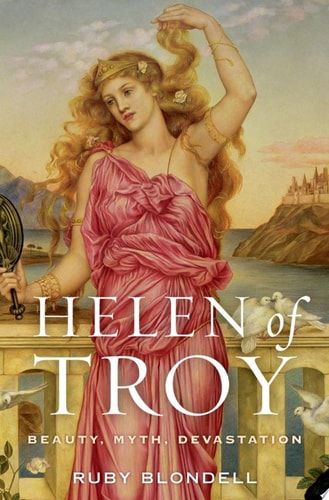
Helen of Troy: Beauty, Myth, Devastation
0
0
As an Amazon Associate and affiliate partner, Menrva Books earns from qualifying purchases. Learn more
Author Description
Ancient Greek culture is pervaded by a profound ambivalence regarding female beauty. It is an awe-inspiring, supremely desirable gift from the gods, essential to the perpetuation of a man's name through reproduction; yet it also grants women terrifying power over men, posing a threat inseparable from its allure. The myth of Helen is the central site in which the ancient Greeks expressed and reworked their culture's anxieties about erotic desire. Despite the passage of three millennia, contemporary culture remains almost obsessively preoccupied with all the power and danger of female beauty and sexuality that Helen still represents. Yet Helen, the embodiment of these concerns for our purported cultural ancestors, has been little studied from this perspective. Such issues are also central to contemporary feminist thought. Helen of Troy engages with the ancient origins of the persistent anxiety about female beauty, focusing on this key figure from ancient Greek culture in a way that both extends our understanding of that culture and provides a useful perspective for reconsidering aspects of our own. Moving from Homer and Hesiod to Sappho, Aeschylus, and Euripides, Ruby Blondell offers a fresh examination of the paradoxes and ambiguities that Helen embodies. In addition to literary sources, Blondell considers the archaeological record, which contains evidence of Helen's role as a cult figure, worshipped by maidens and newlyweds. The result is a compelling new interpretation of this alluring figure.
Menrva's Summary
THE THESIS
This book investigates how the myth of Helen of Troy serves as a primary site for ancient Greek cultural anxieties regarding female beauty and erotic desire. Ruby Blondell, a scholar of classical literature, utilizes a multidisciplinary approach to examine how Helen functions as both a divine gift and a dangerous, destabilizing force within patriarchal structures. By analyzing the evolution of the Helen figure across centuries of Greek thought, the author argues that these ancient paradoxes continue to inform contemporary societal perceptions of female sexuality and power.
THE SCOPE MAP
What You Will Find
- Analysis of primary literary sources including Homer, Hesiod, Sappho, Aeschylus, and Euripides.
- Examination of the archaeological record regarding Helen as a cult figure and object of worship.
- Exploration of the intersection between ancient Greek gender dynamics and modern feminist theory.
- A historical framework tracing the evolution of the Helen myth from the archaic period through the classical era.
THE AUTHORITY PERSPECTIVE
Scholars and classicists frequently cite this work for its nuanced synthesis of literary analysis and archaeological evidence. It is widely regarded as a rigorous examination of the cultural construction of beauty in the ancient world.
Page Count:
312
Publication Date:
2013-01-01
Publisher:
Oxford University Press
ISBN-10:
0199911932
ISBN-13:
9780199911936
History
Ancient History
English & College Success
Mythology
Ancient Greece
Gender Studies
Criticism history
Feminist Theory
English
Community Tags
Similar Books