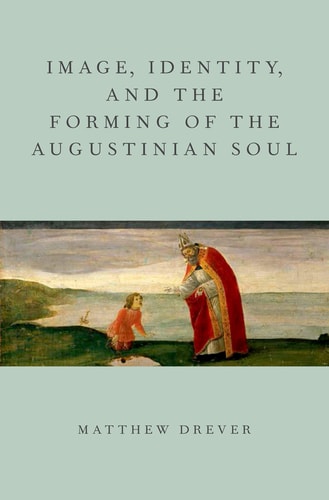
Image, Identity, and the Forming of the Augustinian Soul
0
0
As an Amazon Associate and affiliate partner, Menrva Books earns from qualifying purchases. Learn more
Author Description
In our current pluralist context, there is no clearly designated means of valuing or defining the human person. Matthew Drever shows that in the writings of St. Augustine we find a concept of the human person that is fluid, tenuous, prone to great good and great vice, and influenced deeply by the wider spiritual and material environment. Through an examination of his account of the human relation to God, Drever demonstrates how Augustine can offer a crucial resource for a religious reorientation and revaluation of the human person.Drever focuses particularly on the concepts of the imago dei and creatio ex nihilo, significant for their influence on Augustine's understanding of the human person and for their potential to bridge his and our own world. Though rooted in Augustine's early work, these concepts are developed fully in his later writings: his Genesis commentaries and On the Trinity in particular. Drever examines how in these later writings the origin (creatio ex nihilo) and identity (imago dei) of the human person intersect with Augustine's understanding of creation, Christ, and the Trinity.Image, Identity, and the Forming of the Augustinian Soul constructs an interpretation of Augustine's view of the person that acknowledges its classical context while also addressing contemporary theological and philosophical appropriations of Augustine and the issues that animate them.
Menrva's Summary
THE THESIS
This work investigates how St. Augustine’s theological framework regarding the human person provides a viable resource for addressing contemporary questions of identity and value in a pluralist society. Matthew Drever, a scholar of historical theology, utilizes a rigorous analysis of Augustine’s primary texts to argue that the concepts of imago dei and creatio ex nihilo offer a nuanced understanding of human fluidity and moral potential. By tracing these themes from early writings through later commentaries on Genesis and the Trinity, Drever constructs a bridge between classical patristic thought and modern philosophical discourse.
THE SCOPE MAP
What You Will Find
- An analysis of the imago dei and creatio ex nihilo as foundational concepts for Augustinian anthropology.
- A comparative study of Augustine’s early works versus his later commentaries on Genesis and the Trinity.
- An examination of the intersection between human identity and the theological doctrines of creation, Christ, and the Trinity.
- A critical engagement with contemporary theological and philosophical interpretations of Augustine’s work.
THE AUTHORITY PERSPECTIVE
Scholars and students of patristics frequently identify this text as a significant contribution to the ongoing dialogue between classical theology and modern identity theory. The prose is noted for its academic rigor and its ability to synthesize complex metaphysical arguments into a coherent framework for contemporary application.
Page Count:
288
Publication Date:
2013-07-01
Publisher:
Oxford University Press
ISBN-10:
0199916330
ISBN-13:
9780199916337
Religion
Philosophy
History
Christianity
Spiritual life
Theology
Augustinians
Community Tags
Other Editions(2)

Similar Books