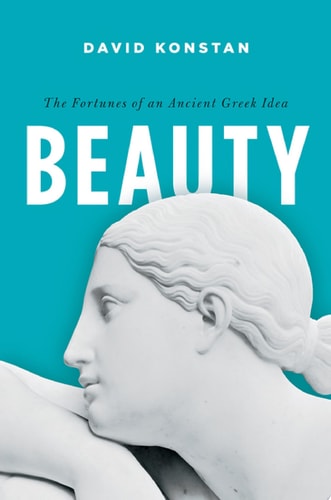
Beauty
0
0
As an Amazon Associate and affiliate partner, Menrva Books earns from qualifying purchases. Learn more
Author Description
What Does It Mean To Say Something Is Beautiful? On The One Hand, Beauty Is Associated With Erotic Attraction; On The Other, It Is The Primary Category In Aesthetics, And It Is Widely Supposed That The Proper Response To A Work Of Art Is One Of Objective Contemplation. At Its Core, Then, Beauty Is A Contested Concept, And Both Sides Feel Comfortable Appealing To The Authority Of Plato, And Via Him, To The Ancient Greeks Generally. So, Who Is Right-if Either? Beauty Offers An Elegant Investigation Of Ancient Greek Notions Of Beauty And, In The Process, Sheds Light On How We Ought To Appreciate The Artistic Achievements Of The Classical World. The Book Opens By Reexamining The Commonly Held Notion That The Ancient Greeks Possessed No Term That Can Be Unambiguously Defined As Beauty Or Beautiful. Author David Konstan Discusses A Number Of Greek Approximations Before Positioning The Heretofore Unexamined Term Kállos As The Key To Bridging The Gap Between Beauty And Desire, And Tracing Its Evolution As Applied To Physical Beauty, Art, Literature, And More. The Book Then Examines Corresponding Terms In Biblical Hebrew And Ancient Latin Literature To Highlight The Survival Of Greek Ideas In The Latin West. The Final Chapter Compares The Ancient Greek Conception Of Beauty With Modern Notions Of Beauty And Aesthetics. In Particular, It Focuses On The Reception Of Classical Greek Art In The Renaissance And How Vasari And His Contemporaries Borrowed From Plato The Sense That The Beauty In Art Was Transcendental, But Left Out The Erotic Dimension Of Viewing. Even If Greece Was The Inspiration For Modern Aesthetic Ideals, This Study Illustrates How The Greek View Of The Relationship Between Beauty And Desire Was Surprisingly Consistent-and Different From Our Own. This Fascinating And Magisterial Exploration Makes It Possible To Identify How The Greeks Thought Of Beauty, What It Was That Attracted Them, And What Their Perceptions Can Still Tell Us About Art, Love, Desire-and Beauty.
Menrva's Summary
THE THESIS
This book investigates the fundamental question of what it means to define something as beautiful by examining the evolution of the concept within ancient Greek thought. Author David Konstan, a scholar of classics, utilizes linguistic analysis and historical texts to challenge the assumption that the Greeks lacked a definitive term for beauty. He argues that the term 'kállos' serves as a crucial bridge between physical attraction and aesthetic appreciation, providing a framework that contrasts sharply with modern, detached notions of art.
THE SCOPE MAP
What You Will Find
- Linguistic analysis of the Greek term 'kállos' and its evolution across literature and art.
- Comparative studies of corresponding aesthetic terms in Biblical Hebrew and Latin literature.
- Historical examination of how Renaissance thinkers like Vasari reinterpreted Greek ideals.
- A critical comparison between the erotic dimensions of ancient beauty and modern transcendental aesthetics.
THE AUTHORITY PERSPECTIVE
Scholars and students of classical philosophy frequently cite this work for its precise linguistic rigor and its ability to bridge the gap between ancient and modern aesthetic theory. Experts highlight the text as a significant contribution to the study of how cultural perceptions of desire and art have shifted over time.
Page Count:
256
Publication Date:
2014-01-01
Publisher:
Oxford University Press
ISBN-10:
0199927278
ISBN-13:
9780199927272
Philosophy
History
Aesthetics
Art History
Ancient Greece
Community Tags
Similar Books