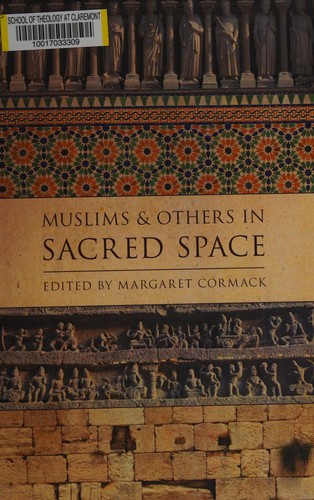
Muslims and Others in Sacred Space
0
0
As an Amazon Associate and affiliate partner, Menrva Books earns from qualifying purchases. Learn more
Author Description
This collection of seven essays offers wide-ranging and in-depth studies of locations sacred to Muslims, of the histories of these sites (real or imagined), and of the ways in which Muslims and members of other religions have interacted peaceably in sacred times and spaces.After a theoretical introduction by Peter Gottschalk, David Damrel discusses historic and modern controversies surrounding Muslim practices at shrines in South Asia. Lance Laird presents a case study of a shrine holy to Palestinian Christians, who identify its patron as St. George, as well as to Palestinian Muslims, who believe that its patron is al Kha?r/Khi?r. Ethel Sara Wolper illustrates how al Khi?r's patronage was used also to show Muslim connections to Christian sites in Anatolia, and JoAnn Gross's essay explores oral and written traditions linking shrines in Tajikistan to traditional Muslim locations and figures. A chapter by the late Thomas Sizgorich examines how Christian and Muslim authors used monastic settings to reimagine the relationship between the two religions, and Alexandra Cuffel offers a study of attitudes towards the mixing of religious groups in religious festivals in eleventh- to sixteenth-century Egypt. Eric Ross shows how the Layenne Sufi order incorporates a singular combination of Christian and Muslim figures and festivals in its history and practices.Muslims and Others in Sacred Space will be an invaluable resource to anyone interested in the complex meanings of sacred sites in Muslim history.
Menrva's Summary
THE THESIS
This collection of essays investigates the historical and contemporary intersections of Muslim sacred spaces and the interactions between Muslims and practitioners of other faiths. Edited by Margaret Cormack, the volume brings together scholars who analyze how specific sites—both real and imagined—serve as points of convergence for diverse religious traditions. By examining case studies ranging from South Asia to Egypt and Anatolia, the contributors argue that sacred geography often facilitates complex, peaceable coexistence rather than simple exclusion.
THE SCOPE MAP
What You Will Find
- Comparative analysis of shrine practices in South Asia, Tajikistan, and the Middle East.
- Historical examinations of religious syncretism in eleventh
- to sixteenth-century Egypt.
- Case studies on the role of shared patron figures like al-Khidr and St. George.
- Theoretical frameworks regarding the social and political construction of sacred sites.
THE AUTHORITY PERSPECTIVE
Scholars and students of religious history frequently cite this collection as a useful resource for understanding the nuances of interfaith dynamics at sacred sites. The text is noted for its diverse geographical focus and its ability to bridge the gap between theoretical religious studies and concrete historical case studies.
Page Count:
256
Publication Date:
2012-12-06
Publisher:
Oxford University Press
ISBN-10:
0199925062
ISBN-13:
9780199925063
History
Religion
Islam
Islamic Shrines
Sociology
Sacred Space