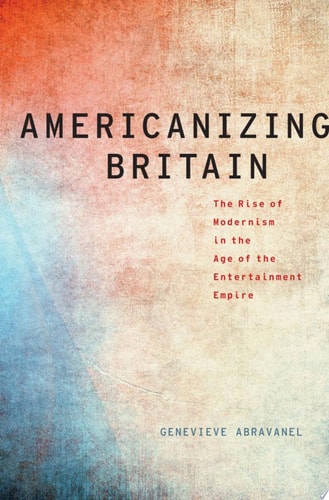
Americanizing Britain: The Rise of Modernism in the Age of the Entertainment Empire
0
0
As an Amazon Associate and affiliate partner, Menrva Books earns from qualifying purchases. Learn more
Author Description
How Did Great Britain, Which Entered The Twentieth Century As A Dominant Empire, Reinvent Itself In Reaction To Its Fears And Fantasies About The United States? Investigating The Anxieties Caused By The Invasion Of American Culture-from Jazz To Ford Motorcars To Hollywood Films-during The First Half Of The Twentieth Century, Genevieve Abravanel Theorizes The Rise Of The American Entertainment Empire As A New Style Of Imperialism That Threatened Britain's Own. In The Early Twentieth Century, The United States Excited A Range Of Utopian And Dystopian Energies In Britain. Authors Who Might Ordinarily Seem To Have Little In Common-h.g. Wells, Aldous Huxley, And Virginia Woolf-began To Imagine Britain's Future Through America. Abravanel Explores How These Novelists Fashioned Transatlantic Fictions As A Response To The Encroaching Presence Of Uncle Sam. She Then Turns Her Attention To The Arrival Of Jazz After World War I, Showing How A Range Of Writers, From Elizabeth Bowen To W.h. Auden, Deployed The New Music As A Metaphor For The Modernization Of England. The Global Phenomenon Of Hollywood Film Proved Even More Menacing Than The Jazz Craze, Prompting Nostalgia For English Folk Culture And A Lament For Britain's Literary Heritage. Abravanel Then Refracts British Debates About America Through The Writing Of Two Key Cultural Critics: F.r. Leavis And T.s. Eliot. In So Doing, She Demonstrates The Interdependencies Of Some Of The Most Cherished Categories Of Literary Study-language, Nation, And Artistic Value-by Situating The High-low Debates Within A Transatlantic Framework.
Menrva's Summary
THE THESIS
How did the perceived encroachment of American cultural influence during the early twentieth century fundamentally reshape British national identity and literary production? Genevieve Abravanel, an academic specializing in transatlantic literary studies, examines the anxieties and fascinations that the United States provoked in Britain during the first half of the twentieth century. By analyzing a diverse array of cultural artifacts and literary works, she argues that the rise of American mass entertainment functioned as a form of soft imperialism that forced British intellectuals to redefine their own concepts of nationhood, language, and artistic value.
THE SCOPE MAP
What You Will Find
- Analysis of the impact of jazz, Fordism, and Hollywood cinema on British cultural discourse.
- Examination of literary responses from figures including H.G. Wells, Aldous Huxley, Virginia Woolf, Elizabeth Bowen, and W.H. Auden.
- Investigation of the critical frameworks established by F.R. Leavis and T.S. Eliot regarding high and low culture.
- Exploration of the intersection between transatlantic political tensions and the evolution of British modernism.
THE AUTHORITY PERSPECTIVE
Scholars recognize this work as a significant contribution to the study of transatlantic modernism and the history of cultural globalization. Readers frequently note the academic density of the prose, which provides a rigorous examination of how imperial anxieties influenced the development of twentieth-century British literature.
Page Count:
224
Publication Date:
2012-01-01
Publisher:
Oxford University Press, Incorporated
ISBN-10:
0199921261
ISBN-13:
9780199921263
History
Literary Criticism
British History
American Studies
United States
English literature
Modernism
Community Tags
Other Editions(2)
Similar Books