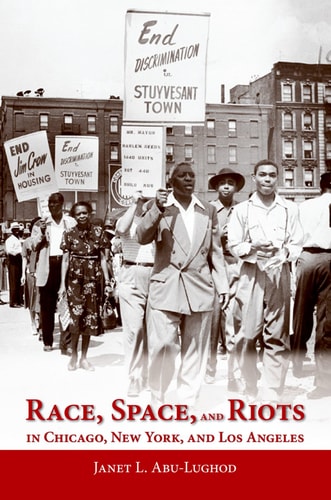
Race, Space, and Riots in Chicago, New York, and Los Angeles
0
0
As an Amazon Associate and affiliate partner, Menrva Books earns from qualifying purchases. Learn more
Author Description
American society has been long plagued by cycles of racial violence, most dramatically in the 1960s when hundreds of ghetto uprisings erupted across American cities. Though the larger, underlying causes of contentious race relations have remained the same, the lethality, intensity, and outcomes of these urban rebellions have varied widely. What accounts for these differences? And what lessons can be learned that might reduce the destructive effects of riots and move race relations forward?This impressive, meticulously detailed study is the first attempt to compare six major race riots that occurred in the three largest American urban areas during the course of the twentieth century: in Chicago in 1919 and 1968; in New York in 1935/1943 and 1964; and in Los Angeles in 1965 and 1992. Race, Space, and Riots in Chicago, New York, and Los Angeles weaves together detailed narratives of each riot, placing them in their changing historical contexts and showing how urban space, political regimes, and economic conditions--not simply an abstract "race conflict"--have structured the nature and extent of urban rebellions. Building on her previous groundbreaking comparative history of these three cities, Janet Abu-Lughod draws upon archival research, primary sources, case studies, and personal observations to reconstruct events--especially for the 1964 Harlem-Bedford Stuyvesant uprising and Chicago's 1968 riots where no documented studies are available. By focusing on the similarities and differences in each city, identifying the unique and persisting issues, and evaluating the ways political leaders, law enforcement, and the local political culture have either defused or exacerbated urban violence, this book points the way toward alleviating long-standing ethnic and racial tensions.A masterful analysis from a renowned urbanist, Race, Space, and Riots in Chicago, New York, and Los Angeles offers a deeper understanding of past--and future--urban race relations while emphasizing the importance of local political structures.
Menrva's Summary
THE THESIS
What structural and political factors account for the variation in intensity, lethality, and outcomes of major urban race riots across three major American cities during the twentieth century? Janet L. Abu-Lughod, a renowned urbanist, utilizes her extensive background in comparative urban history to investigate the intersection of geography, political regimes, and economic conditions. By synthesizing archival research, primary source documentation, and personal observation, she argues that urban rebellions are not merely products of abstract racial conflict but are deeply shaped by the specific spatial and political environments of the cities in which they occur.
THE SCOPE MAP
What You Will Find
- Comparative analysis of six major race riots in Chicago (1919, 1968), New York (1935, 1943, 1964), and Los Angeles (1965, 1992).
- Examination of how urban space, local political culture, and law enforcement strategies influence the trajectory of civil unrest.
- Reconstruction of historical events using archival research and primary sources, including original documentation for under-studied uprisings.
- Evaluation of the role of political leadership in either mitigating or exacerbating ethnic and racial tensions within metropolitan environments.
THE AUTHORITY PERSPECTIVE
Experts recognize this work as a foundational comparative study that moves beyond simplistic explanations of urban violence. Readers frequently note the academic density of the prose and the meticulous attention to the specific historical contexts of each city.
Page Count:
360
Publication Date:
2012-07-09
Publisher:
Oxford University Press
ISBN-10:
0199936552
ISBN-13:
9780199936557
History
Urban Studies
Race Relations
African Americans
Sociology
United States
Community Tags
Other Editions(4)

Similar Books





Reader Comments
Share Your Thoughts
No comments yet. Be the first to share your thoughts!