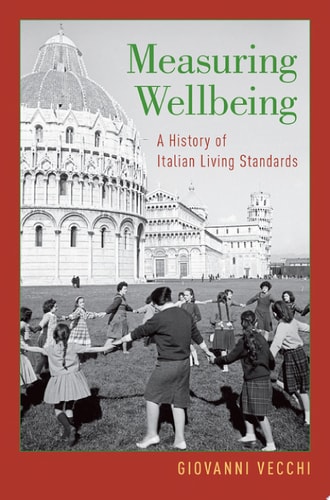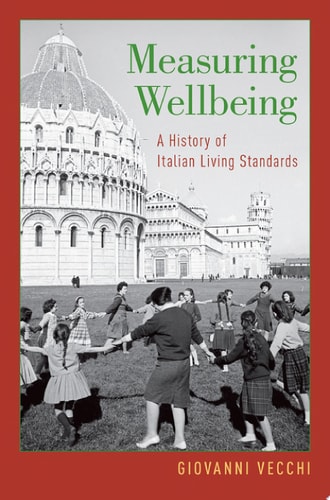
Measuring Wellbeing
0
0
As an Amazon Associate and affiliate partner, Menrva Books earns from qualifying purchases. Learn more
Author Description
In 150 Years Italy Transformed Itself From A Poor And Backward Country Into One Where Living Standards Are Among The Highest In The World. In Measuring Wellbeing, Giovanni Vecchi Provides An Innovative Analysis Of This Change By Drawing On Family Accounts That Provide Engaging Insights Into Life And Are The Micro Data That Create The Foundations For The Macro Picture Of Variations And Fluctuations In The Development Of Italy. Vecchi Provides A Nuanced Account Of The Changes. He Emphasizes That The Concept Of Wellbeing Is Multidimensional And Must Include Non-monetary Aspects Of Life: Nutrition, Health And Education, As Well As Less Tangible Elements Such As Freedom Or The Possibility To Exercise One's Political Rights. The Book Deals With This Polyhedral Nature Of Wellbeing. Among The Insights Are That Italians Succeeded In Combining Growth With Equity, But That The Gap Between The North And South Did Not Narrow; The While Longevity Has Increased, Education Has Not Improved As Much As It Could Have; And That For Close To Three Decades, Italy's Virtuous Path Has Come To A Halt: The Wellbeing Of The Italian People Is At The Crossroads Between Progress And Decline. Measuring Wellbeing Engagingly Combines A Unique Dataset And An Innovative Statistical Method That Can Be Adapted To Other Countries.
Menrva's Summary
THE THESIS
This book investigates the multidimensional evolution of Italian living standards over the past 150 years to determine how economic growth and social wellbeing have interacted. Giovanni Vecchi, an expert in economic history and statistics, utilizes a unique dataset derived from historical family accounts to construct a comprehensive framework for measuring human development. By integrating both monetary and non-monetary indicators, the author argues that Italy's progress is a complex, polyhedral phenomenon that requires a nuanced analytical approach beyond simple GDP metrics.
THE SCOPE MAP
What You Will Find
- A longitudinal analysis of Italian socioeconomic development spanning 150 years.
- A multidimensional framework incorporating nutrition, health, education, and political rights.
- Innovative statistical methodologies for analyzing micro-level family data to inform macro-level trends.
- Comparative insights into regional disparities, specifically the persistent gap between Northern and Southern Italy.
THE AUTHORITY PERSPECTIVE
Experts recognize this work as a significant contribution to the field of economic history due to its creative use of primary source family accounts. Readers frequently note the technical rigor of the statistical methods while appreciating the clarity with which the author addresses the current stagnation of Italian wellbeing.
Page Count:
640
Publication Date:
2017-01-01
Publisher:
Oxford University Press
ISBN-10:
0199944601
ISBN-13:
9780199944606
History
Economics
Statistics
Italy
Sociology
Community Tags
Similar Books