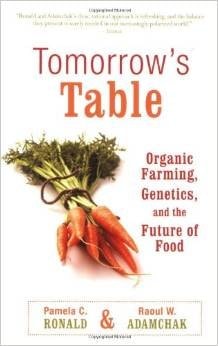
Tomorrow's Table: Organic Farming, Genetics, and the Future of Food
0
0
As an Amazon Associate and affiliate partner, Menrva Books earns from qualifying purchases. Learn more
Author Description
By the year 2050, Earth's population will double. If we continue with current farming practices, vast amounts of wilderness will be lost, millions of people and billions of animals will suffer, and the quality of life will plummet. The answer is "Tomorrow's Table." In this book, Pamela C. Ronald, a geneticist, and her husband, Raoul W. Adamchak, an organic farmer, take the reader inside their lives for a year. They show us that there are two sides to the story of food: the organic side and the genetic side. They argue that both are necessary to feed the world and protect the environment. They show how genetic engineering can be used to create crops that are more resistant to disease and pests, and how organic farming can be used to improve soil health and biodiversity. They also show how the two can work together to create a more sustainable food system.
Menrva's Summary
THE THESIS
This book investigates the intersection of genetic engineering and organic farming to determine if these two approaches can coexist to create a sustainable global food system. Pamela C. Ronald, a plant geneticist, and Raoul W. Adamchak, an organic farmer, combine their professional expertise to argue that the most effective path forward involves integrating the precision of biotechnology with the ecological stewardship of organic agriculture. They present a framework that prioritizes scientific evidence and environmental health over ideological divides in the debate surrounding genetically modified organisms.
THE SCOPE MAP
What You Will Find
- An analysis of the history and safety of genetic engineering in crop development.
- Practical insights into the daily operations and challenges of organic farming.
- A comparative study of various agricultural methods and their environmental impacts.
Scope Limits
- The text does not provide an exhaustive legal analysis of international patent laws regarding seeds.
- It does not cover the entirety of global agricultural policy, focusing primarily on the North American context.
THE AUTHORITY PERSPECTIVE
Experts frequently cite this work as a balanced, accessible bridge between the scientific community and the general public. Readers note the clarity of the prose, which effectively demystifies complex genetic concepts for non-specialist audiences.
Page Count:
0
Publication Date:
2010-01-01
Publisher:
Oxford University Press Inc
ISBN-10:
0190201452
ISBN-13:
9780190201456
Science
Non-Fiction
Food Policy
Agriculture
Genetics
Subjects
Sustainability
Community Tags
Similar Books