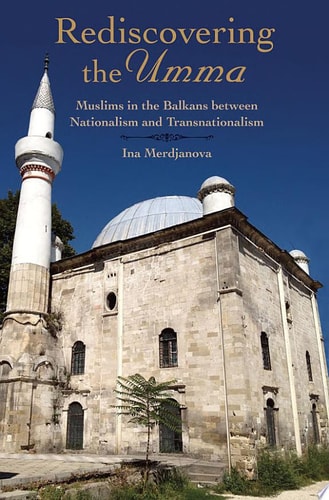
Rediscovering the Umma: Muslims in the Balkans between Nationalism and Transnationalism
0
0
As an Amazon Associate and affiliate partner, Menrva Books earns from qualifying purchases. Learn more
Author Description
In Rediscovering the Umma, Ina Merdjanova discusses the conditions and role of Islam in relation to post-Ottoman nation-building, the communist period, and post-communist developments in the Balkans, focusing in particular on the remarkable transformations experienced by Muslim communities after the end of the Cold War. Amidst multiple structural and cultural transitions, they sought to renegotiate their place and reclaim their Islamic identities in formally secular legal and normative environments, mostly as minorities in majority-Christian societies.The rising political and cultural self-awareness of Muslims in Southeast Europe was frequently expressed by recourse to two frames of reference: the national and the transnational. Despite a certain level of tension between those two perspectives, they were closely intertwined. Moreover, transnational Islamic influences often reinforced Muslim ethnonational identities rather than prompting a radical redefinition of religious allegiances in the key of a "universalist" Islam.Merdjanova explores the transformations of Muslim identities in the region under the influence of national and transnational, domestic and global factors, while also looking at the historical legacies that inform present complexities. Furthermore, she examines the evolving status and roles of Muslim women both in their religious communities and in the larger societies. The book challenges representations of Islam and Muslims as alien to Europe, which overlook the fact that Europe has considerable indigenous Muslim populations in its southeastern part as well as societies that have developed certain models of negotiating cultural differences.
Menrva's Summary
THE THESIS
This book investigates how Muslim communities in the Balkans navigate the complex intersection of national identity and transnational religious belonging within post-communist, secular European states. Ina Merdjanova, a scholar specializing in religion and society in Southeast Europe, utilizes historical analysis and contemporary sociological observation to examine the evolution of Islamic identity. She argues that the post-Cold War era forced a renegotiation of religious practice, where global Islamic influences often paradoxically strengthened local ethnonational identities rather than replacing them with a singular universalist framework.
THE SCOPE MAP
What You Will Find
- Historical analysis of Islam in the Balkans from the post-Ottoman period through the communist era to the present.
- Examination of the tension between nationalistic pressures and transnational Islamic movements.
- Case studies on the evolving social and religious roles of Muslim women in Southeast Europe.
- Analysis of how indigenous Muslim populations negotiate cultural differences within majority-Christian societies.
THE AUTHORITY PERSPECTIVE
Experts recognize this work as a critical contribution to the study of European Islam, noting its success in challenging monolithic perceptions of Muslim communities. Scholars frequently highlight the text's nuanced approach to the interplay between local history and global religious trends.
Page Count:
216
Publication Date:
2013-02-19
Publisher:
Oxford University Press
ISBN-10:
0199964033
ISBN-13:
9780199964031
Religion
History
Islam
Balkans
Sociology
Muslims
Ethnicity
Community Tags
Other Editions(2)
Similar Books