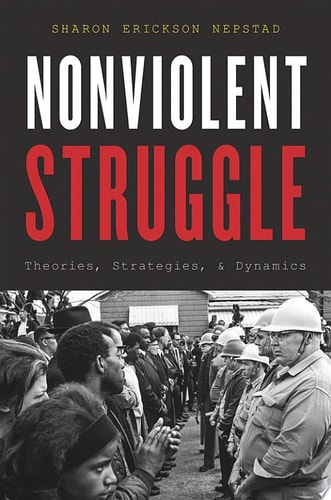
Nonviolent Struggle: Theories, Strategies, and Dynamics
0
0
As an Amazon Associate and affiliate partner, Menrva Books earns from qualifying purchases. Learn more
Author Description
From Gandhi's movement to win Indian independence to the Arab Spring uprisings of 2011, an expanding number of citizens have used nonviolent action to win political goals. While such events have captured the public imagination, they have also generated a new surge of scholarly interest in the field of nonviolence and civil resistance studies. Although researchers have produced new empirical data, theories, and insights into the phenomenon of nonviolent struggle, the field is still quite unfamiliar to many students and scholars.In Nonviolent Struggle: Theories, Strategies, and Dynamics, sociologist Sharon Nepstad provides a succinct introduction to the field of civil resistance studies, detailing its genesis, key concepts and debates, and a summary of empirical findings. Nepstad depicts the strategies and dynamics at play in nonviolent struggles, and analyzes the factors that shape the trajectory and outcome of civil resistance movements. The book draws on a vast array of historical examples, including the U.S. civil rights movement, the Indonesian uprising against President Suharto, the French Huguenot resistance during World War II, and Cesar Chavez's United Farm Workers. Nepstad describes both principled and pragmatic nonviolent traditions and explains various categories of nonviolent action, concluding with an assessment of areas for future research.A comprehensive treatment of the philosophy and strategy of nonviolent resistance, Nonviolent Struggle is essential reading for students, scholars, and anyone with a general interest in peace studies and social change.
Menrva's Summary
THE THESIS
What are the core theories, strategic dynamics, and historical outcomes that define the efficacy of nonviolent civil resistance movements? Sociologist Sharon Erickson Nepstad synthesizes decades of empirical research to provide a foundational framework for understanding how nonviolent action functions as a political tool. By examining the intersection of principled philosophy and pragmatic strategy, the author clarifies the mechanisms that allow citizens to challenge entrenched power structures and achieve systemic change.
THE SCOPE MAP
What You Will Find
- Theoretical frameworks distinguishing between principled and pragmatic nonviolent traditions.
- Comparative analysis of historical movements including the U.S. civil rights movement, the Indonesian uprising, and the French Huguenot resistance.
- Methodological breakdown of categories of nonviolent action and their tactical applications.
- Assessment of current scholarly debates and identification of critical areas for future research in civil resistance studies.
THE AUTHORITY PERSPECTIVE
Experts and academics recognize this work as a highly accessible and structured introduction to the field of civil resistance. Readers frequently note that the text serves as a clear, comprehensive primer for students and researchers seeking to understand the mechanics of social movements without excessive academic jargon.
Page Count:
264
Publication Date:
2015-10-01
Publisher:
Oxford University Press
ISBN-10:
019997599X
ISBN-13:
9780199975990
History
Nonviolence
Peace studies
Sociology
Social change
Community Tags
Similar Books