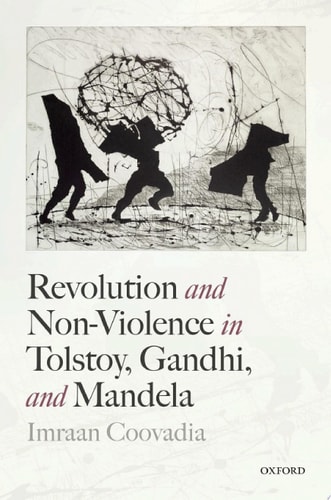
Revolution and Non-Violence in Tolstoy, Gandhi, and Mandela
0
0
As an Amazon Associate and affiliate partner, Menrva Books earns from qualifying purchases. Learn more
Author Description
The dangers of political violence and the possibilities of non-violence were the central themes of three lives which changed the twentieth century—Leo Tolstoy, writer and aristocrat who turned against his class, Mohandas Gandhi who corresponded with Tolstoy and considered him the most important person of the time, and Nelson Mandela, prisoner and statesman, who read War and Peace on Robben Island and who, despite having led a campaign of sabotage, saw himself as a successor to Gandhi. Tolstoy, Gandhi, and Mandela tried to create transformed societies to replace the dying forms of colony and empire. They found the inequalities of Russia, India, and South Africa intolerable yet they questioned the wisdom of seizing the power of the state, creating new kinds of political organisation and imagination to replace the old promises of revolution. Their views, along with their ways of leading others, are closely connected, from their insistence on working with their own hands and reforming their individual selves to their acceptance of death. On three continents, in a century of mass mobilization and conflict, they promoted strains of nationalism devoid of antagonism, prepared to take part in a general peace. Looking at Tolstoy, Gandhi, and Mandela in sequence, taking into account their letters and conversations as well as the institutions they created or subverted, placing at the centre their treatment of the primal fantasy of political violence, this volume reveals a vital radical tradition which stands outside the conventional categories of twentieth-century history and politics.
Menrva's Summary
THE THESIS
This volume investigates the interconnected philosophies of non-violence and political transformation as practiced by Leo Tolstoy, Mohandas Gandhi, and Nelson Mandela. Author Imraan Coovadia examines how these three figures navigated the transition from colonial and imperial structures to new forms of political organization. By analyzing their personal correspondence, institutional influence, and individual moral development, the book argues that these leaders established a radical tradition that challenged the necessity of state-sanctioned violence.
THE SCOPE MAP
What You Will Find
- Comparative analysis of political thought across Russia, India, and South Africa.
- Examination of the role of manual labor and self-reform in political leadership.
- Investigation into the rejection of antagonistic nationalism in favor of general peace.
Scope Limits
- The text does not provide a comprehensive biography of each individual, focusing instead on their specific intersection regarding non-violence.
- It does not cover the entirety of twentieth-century political history, limiting its scope to the specific lineage of these three figures.
THE AUTHORITY PERSPECTIVE
Scholars and readers note the book's ability to synthesize disparate historical contexts into a cohesive philosophical argument. Experts highlight this as a thoughtful contribution to the study of political ethics and the history of non-violent resistance.
Page Count:
245
Publication Date:
2020-01-01
Publisher:
OUP Oxford
ISBN-10:
0192609092
ISBN-13:
9780192609090
Biography
History
Philosophy
Nonviolence
Social change
Non-violence
Community Tags
Similar Books