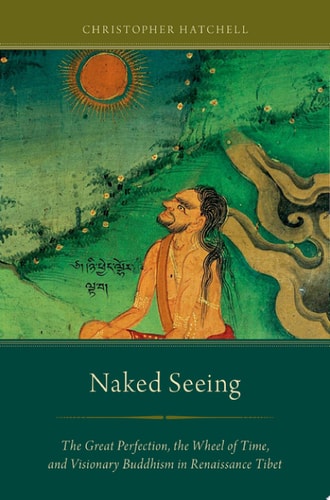
Naked Seeing: The Great Perfection, the Wheel of Time, and Visionary Buddhism in Renaissance Tibet
0
0
As an Amazon Associate and affiliate partner, Menrva Books earns from qualifying purchases. Learn more
Author Description
Buddhism is in many ways a visual tradition, with its well-known practices of visualization, its visual arts, its epistemological writings that discuss the act of seeing, and its literature filled with images and metaphors of light. Some Buddhist traditions are also visionary, advocating practices by which meditators seek visions that arise before their eyes. Naked Seeing investigates such practices in the context of two major esoteric traditions, the Wheel of Time (Kalacakra) and the Great Perfection (Dzogchen). Both of these experimented with sensory deprivation, and developed yogas involving long periods of dwelling in dark rooms or gazing at the open sky. These produced unusual experiences of seeing, which were used to pursue some of the classic Buddhist questions about appearances, emptiness, and the nature of reality. Along the way, these practices gave rise to provocative ideas and suggested that, rather than being apprehended through internal insight, religious truths might also be seen in the exterior world-realized through the gateway of the eyes. Christopher Hatchell presents the intellectual and literary histories of these practices, and also explores the meditative techniques and physiology that underlie their distinctive visionary experiences.The book also offers for the first time complete English translations of three major Tibetan texts on visionary practice: a Kalacakra treatise by Yumo Mikyo Dorjé, The Lamp Illuminating Emptiness, a Nyingma Great Perfection work called The Tantra of the Blazing Lamps, and a Bön Great Perfection work called Advice on the Six Lamps, along with a detailed commentary on this by Drugom Gyalwa Yungdrung.
Menrva's Summary
THE THESIS
This book investigates the intersection of sensory perception and religious truth within the esoteric Buddhist traditions of the Wheel of Time and the Great Perfection. Christopher Hatchell, a scholar of Tibetan Buddhism, utilizes historical analysis and textual translation to examine how practitioners in Renaissance Tibet utilized specific meditative techniques to externalize religious insight. By analyzing the physiology of vision and the role of light in these traditions, the author argues that these schools proposed a unique epistemology where reality is apprehended directly through the eyes rather than solely through internal cognitive reflection.
THE SCOPE MAP
What You Will Find
- Historical and intellectual analysis of Kalacakra and Dzogchen visionary practices.
- Detailed exploration of meditative techniques involving sensory deprivation and sky-gazing.
- Complete English translations of three seminal Tibetan texts: The Lamp Illuminating Emptiness, The Tantra of the Blazing Lamps, and Advice on the Six Lamps.
- Examination of the physiological and psychological frameworks underlying visionary Buddhist experiences.
THE AUTHORITY PERSPECTIVE
Scholars and practitioners recognize this work as a significant contribution to the study of Tibetan visionary traditions due to its rigorous combination of historical research and primary source translation. Readers frequently note the academic density of the prose, which serves as a foundational resource for those studying the intersection of Buddhist philosophy and sensory experience.
Page Count:
496
Publication Date:
2014-01-01
Publisher:
Oxford University Press
ISBN-10:
0199982929
ISBN-13:
9780199982929
Religion
Spirituality
Philosophy
History
Buddhism
Tantric Buddhism
Community Tags
Similar Books