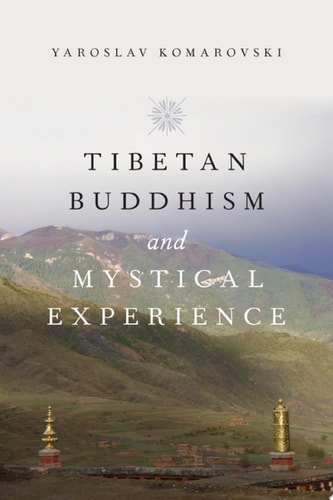
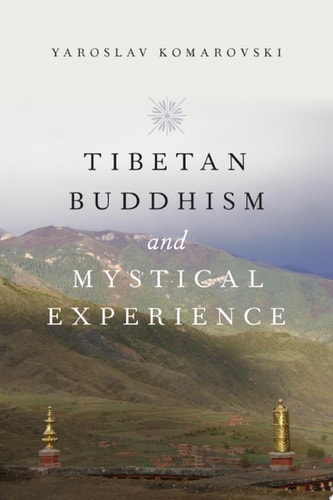
Tibetan Buddhism and Mystical Experience
0
0
As an Amazon Associate and affiliate partner, Menrva Books earns from qualifying purchases. Learn more
Author Description
In this book, Yaroslav Komarovski argues that the Tibetan Buddhist interpretations of the realization of ultimate reality both contribute to and challenge contemporary interpretations of unmediated mystical experience. The model used by the majority of Tibetan Buddhist thinkers states that the realization of ultimate reality, while unmediated during its actual occurrence, is necessarily filtered and mediated by the conditioning contemplative processes leading to it, and Komarovski argues that therefore, in order to understand this mystical experience, one must focus on these processes, rather than on the experience itself.Komarovski also provides an in-depth comparison of seminal Tibetan Geluk thinker Tsongkhapa and his major Sakya critic Gorampa's accounts of the realization of ultimate reality, demonstrating that the differences between these two interpretations lie primarily in their conflicting descriptions of the compatible conditioning processes that lead to this realization. Komarovski maintains that Tsongkhapa and Gorampa's views are virtually irreconcilable, but demonstrates that the differing processes outlined by these two thinkers are equally effective in terms of actually attaining the realization of ultimate reality. Tibetan Buddhism and Mystical Experience speaks to the plurality of mystical experience, perhaps even suggesting that the diversity of mystical experience is one of its primary features.
Menrva's Summary
THE THESIS
This book investigates whether Tibetan Buddhist interpretations of the realization of ultimate reality support or challenge contemporary theories regarding unmediated mystical experience. Yaroslav Komarovski, a scholar of Tibetan Buddhist thought, utilizes a comparative analysis of historical philosophical frameworks to argue that mystical realization is inherently shaped by the contemplative processes that precede it. He posits that the focus of study should shift from the experience itself to the conditioning factors that facilitate such states.
THE SCOPE MAP
What You Will Find
- Comparative analysis of Tsongkhapa and Gorampa
- Philosophical examination of Geluk and Sakya school perspectives
- Theoretical framework regarding mediated versus unmediated mystical states
- Analysis of contemplative conditioning processes
Scope Limits
- Does not provide a general introduction to Tibetan Buddhism for lay readers
- Does not focus on the sociological or ritualistic aspects of Tibetan practice
THE AUTHORITY PERSPECTIVE
Scholars and students of Buddhist philosophy frequently note the high level of academic rigor and the dense, technical nature of the prose. Experts highlight this work as a significant contribution to the comparative study of epistemology and mysticism within the Tibetan tradition.
Page Count:
304
Publication Date:
2015-07-01
Publisher:
Oxford University Press
ISBN-10:
0190244909
ISBN-13:
9780190244903
Religion
Philosophy
Mysticism
Buddhism
Tantric Buddhism
Theology
Buddhist Philosophy
Community Tags
Other Editions(3)
Similar Books