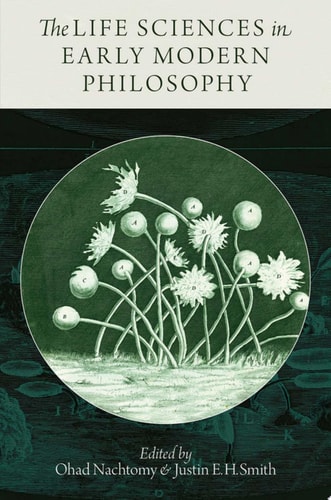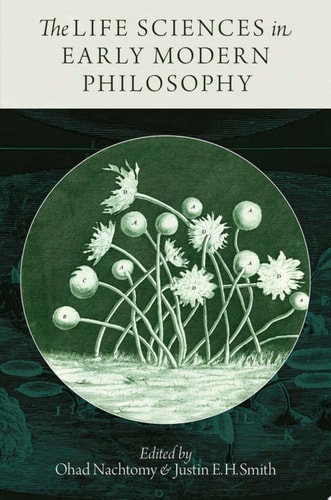
The Life Sciences in Early Modern Philosophy
0
0
As an Amazon Associate and affiliate partner, Menrva Books earns from qualifying purchases. Learn more
Author Description
The present volume advances a recent historiographical turn towards the intersection of early modern philosophy and the life sciences by bringing together many of its leading scholars to present the contributions of important but often neglected figures, such as Ralph Cudworth, Nehemiah Grew, Francis Glisson, Hieronymus Fabricius ab Aquapendente, Georg Ernst Stahl, Juan Gallego de la Serna, Nicholas Hartsoeker, Henry More, as well as more familiar figures such as Descartes, Spinoza, Leibniz, Malebranche, and Kant.The contributions to this volume are organized in accordance with the particular problems that living beings and living nature posed for early modern philosophy: the problem of life in general, whether it constitutes something ontologically distinct at all, or whether it can ultimately be exhaustively comprehended "in the same manner as the rest"; the problem of the structure of living beings, by which we understand not just bare anatomy but also physiological processes such as irritability, motion, digestion, and so on; the problem of generation, which might be included alongside digestion and other vital processes, were it not for the fact that it presented such an exceptional riddle to philosophers since antiquity, namely, the riddle of coming-into-being out of -- apparent or real -- non-being; and, finally, the problem of natural order.
Menrva's Summary
THE THESIS
This volume investigates the complex historical intersection between early modern philosophical inquiry and the emerging life sciences. Editors Justin E. H. Smith and Ohad Nachtomy curate a collection of essays from leading scholars to re-examine how seventeenth and eighteenth-century thinkers conceptualized living nature. By analyzing both canonical figures like Descartes and Leibniz alongside neglected naturalists, the text argues that the ontological status of life was a central, contested problem that shaped the development of modern rationalism and empirical observation.
THE SCOPE MAP
What You Will Find
- Historical analysis of the ontological distinction between living and non-living matter.
- Examination of physiological processes including irritability, digestion, and motion.
- Investigation into the philosophical riddle of generation and the emergence of life from non-being.
- Comparative studies of natural order as understood by early modern philosophers and naturalists.
- Biographical and conceptual surveys of figures such as Ralph Cudworth, Nehemiah Grew, and Francis Glisson.
THE AUTHORITY PERSPECTIVE
Scholars and historians of philosophy identify this collection as a significant contribution to the historiographical shift toward integrating biological inquiry into the study of early modern thought. Readers frequently note the academic density of the prose, which serves as a rigorous resource for advanced students and researchers in the history of science.
Page Count:
272
Publication Date:
2013-01-01
Publisher:
Oxford University Press
ISBN-10:
0199987327
ISBN-13:
9780199987320
Philosophy
Science
History & Surveys
Evolution
Life sciences
Biology