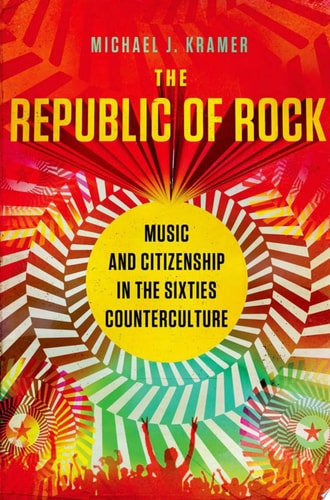
The Republic of Rock: Music and Citizenship in the Sixties Counterculture
0
0
As an Amazon Associate and affiliate partner, Menrva Books earns from qualifying purchases. Learn more
Author Description
In his 1967 megahit "San Francisco," Scott McKenzie sang of "people in motion" coming from all across the country to San Francisco, the white-hot center of rock music and anti-war protests. At the same time, another large group of young Americans was also in motion, less eagerly, heading for the jungles of Vietnam. Now, in The Republic of Rock, Michael Kramer draws on new archival sources and interviews to explore sixties music and politics through the lens of these two generation-changing places--San Francisco and Vietnam. From the Acid Tests of Ken Kesey and the Merry Pranksters to hippie disc jockeys on strike, the military's use of rock music to "boost morale" in Vietnam, and the forgotten tale of a South Vietnamese rock band, The Republic of Rock shows how the musical connections between the City of the Summer of Love and war-torn Southeast Asia were crucial to the making of the sixties counterculture. The book also illustrates how and why the legacy of rock music in the sixties continues to matter to the meaning of citizenship in a global society today. Going beyond clichéd narratives about sixties music, Kramer argues that rock became a way for participants in the counterculture to think about what it meant to be an American citizen, a world citizen, a citizen-consumer, or a citizen-soldier. The music became a resource for grappling with the nature of democracy in larger systems of American power both domestically and globally. For anyone interested in the 1960s, popular music, and American culture and counterculture, The Republic of Rock offers new insight into the many ways rock music has shaped our ideas of individual freedom and collective belonging.
Menrva's Summary
THE THESIS
How did rock music function as a primary vehicle for negotiating the meaning of citizenship and democracy during the volatile political landscape of the 1960s? Michael J. Kramer, a historian and cultural critic, utilizes extensive archival research and original interviews to challenge conventional narratives about the era. He argues that rock music was not merely a soundtrack for rebellion but a complex tool used by various actors—from counterculture hippies to soldiers in Vietnam—to define their roles as citizens within both domestic and global power structures.
THE SCOPE MAP
What You Will Find
- Comparative analysis of the San Francisco counterculture scene and the American military experience in Vietnam.
- Examination of the Acid Tests, the role of disc jockeys, and the use of music in military morale-building.
- Primary source evidence including interviews with participants and archival documentation of musical movements.
- Theoretical framework exploring the intersection of consumerism, individual freedom, and collective political identity.
THE AUTHORITY PERSPECTIVE
Scholars and cultural historians frequently cite this work for its ability to move beyond nostalgic tropes of the 1960s to provide a rigorous analysis of music as a political instrument. Readers often note the academic density of the prose, which makes it a foundational text for those studying the intersection of popular culture and American civic identity.
Page Count:
308
Publication Date:
2013-01-01
Publisher:
Oxford University Press
ISBN-10:
0199987351
ISBN-13:
9780199987351
History
Music
Music Asian
1960s
Sociology
Military History
Social Aspects
Rock music
Humanities
Vietnam
American History
Community Tags
Similar Books