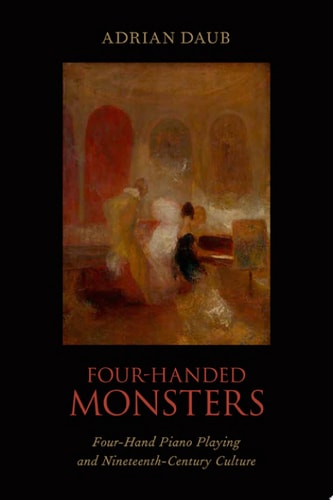
Four-handed Monsters
0
0
As an Amazon Associate and affiliate partner, Menrva Books earns from qualifying purchases. Learn more
Author Description
In The Course Of The Nineteenth Century, Four-hand Piano Playing Emerged Across Europe As A Popular Pastime Of The Well-heeled Classes And Of Those Looking To Join Them. Nary A Canonic Work Of Classical Music That Was Not Set For Piano Duo, Nary A House That Could Afford Not To Invest In Them. Duets Echoed From The Student Bedsit To Buckingham Palace, Resounded In Schools And In Hundreds Of Thousands Of Bourgeois Parlors. Like No Other Musical Phenomenon, It Could Cross National, Social, And Economic Boundaries, Bringing Together Poor Students With The Daughters Of The Bourgeoisie, Crowned Heads With Penniless Virtuosi, And The Nineteenth Century Often Regarded It With Extreme Suspicion For That Very Reason. Four-hand Piano Playing Was Often Understood As A Socially Acceptable Way Of Flirting, A Flurry Of Hands That Made Touching, Often Of Men And Women, Not Just Acceptable But Necessary. But It Also Became Something Far More Serious Than That, A Central Institution Of The Home, Mediating Between Inside And Outside, Family And Society, Labor And Leisure, Nature And Nurture. And Writers, Composers, Musicians, Philosophers, Journalists, Pamphleteers And Painters Took Note: In The Art, Literature, And Philosophy Of The Age, Four-hand Playing Emerged As A Common Motif, Something That Allowed Them To Interrogate The Very Nature Of The Self, The Family, The Community And The State. In The Four Hands Rushing Up And Down The Same Keyboard The Nineteenth Century Espied, Or Thought To Espy, An Astonishing Array Of Things. Four-handed Monsters Tells Not Only The Story Of That Practice, But Also The Story Of The Astonishing Array Of Things The Nineteenth Century Read Into It.
Menrva's Summary
THE THESIS
How did the nineteenth-century practice of four-hand piano playing function as a cultural lens for interpreting social, domestic, and political anxieties? Adrian Daub, a professor of comparative literature and German studies, examines the ubiquity of piano duets in European society to argue that this musical activity served as a critical site for negotiating class, gender, and national identity. By synthesizing historical evidence from literature, art, and musicology, Daub demonstrates that the physical proximity required by the duet became a metaphor for the era's complex social dynamics.
THE SCOPE MAP
What You Will Find
- Analysis of the social and economic reach of four-hand piano playing across nineteenth-century Europe.
- Examination of the duet as a site for gendered interaction and socially sanctioned physical intimacy.
- Investigation of how the piano duet functioned as a motif in literature, philosophy, and visual art.
- Exploration of the tension between domestic leisure and the public sphere within the bourgeois home.
THE AUTHORITY PERSPECTIVE
Scholars and music historians recognize this work as a significant contribution to the study of nineteenth-century cultural practices. Readers frequently note the academic density of the prose and the author's ability to connect musical performance with broader sociological themes.
Page Count:
288
Publication Date:
2014-01-01
Publisher:
Oxford University Press
ISBN-10:
0199981795
ISBN-13:
9780199981793
Musicology
Cultural History
Social History
Music History
Nineteenth century
Community Tags
Similar Books