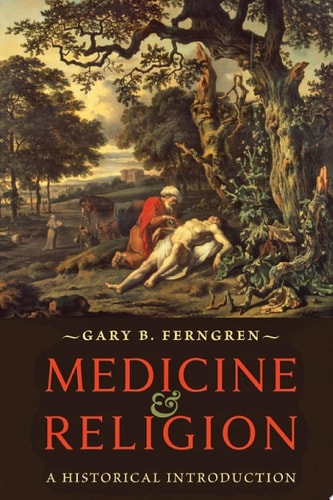
Medicine and Religion
0
0
As an Amazon Associate and affiliate partner, Menrva Books earns from qualifying purchases. Learn more
Author Description
Explores the interplay of medicine and religion in Western societies. Medicine and Religion is the first book to comprehensively examine the relationship between medicine and religion in the Western tradition from ancient times to the modern era. Beginning with the earliest attempts to heal the body and account for the meaning of illness in the ancient Near East, historian Gary B. Ferngren describes how the polytheistic religions of ancient Mesopotamia, Egypt, Greece, and Rome and the monotheistic faiths of Judaism, Christianity, and Islam have complemented medicine in the ancient, medieval, and modern periods. Ferngren paints a broad and detailed portrait of how humans throughout the ages have drawn on specific values of diverse religious traditions in caring for the body. Religious perspectives have informed both the treatment of disease and the provision of health care. And, while tensions have sometimes existed, relations between medicine and religion have often been cooperative and mutually beneficial. Religious beliefs provided a framework for explaining disease and suffering that was larger than medicine alone could offer. These beliefs furnished a theological basis for a compassionate care of the sick that led to the creation of the hospital and a long tradition of charitable medicine. Praise for Medicine and Health Care in Early Christianity, by Gary B. Ferngren "This fine work looks forward as well as backward; it invites fuller reflection of the many senses in which medicine and religion intersect and merits wide readership.”—JAMA "An important book, for students of Christian theology who understand health and healing to be topics of theological interest, and for health care practitioners who seek a historical perspective on the development of the ethos of their vocation.”—Journal of Religion and Health
Menrva's Summary
THE THESIS
This book investigates the complex and often intertwined relationship between medicine and religion throughout Western history. Gary B. Ferngren, a historian, meticulously traces this connection from the ancient Near East to the modern era, examining how various religious traditions—from polytheistic faiths in Mesopotamia, Egypt, Greece, and Rome to the monotheistic religions of Judaism, Christianity, and Islam—have influenced both the understanding of illness and the practice of healing. The work details how religious values have shaped compassionate care, leading to institutions like hospitals and fostering a tradition of charitable medicine, even as occasional tensions have arisen.
THE SCOPE MAP
- Exploration of healing practices and beliefs in ancient Mesopotamia, Egypt, Greece, and Rome.
- Analysis of the role of Judaism, Christianity, and Islam in shaping medical ethics and care.
- Examination of the historical development of hospitals and charitable medicine.
- Discussion of the theological frameworks that provided meaning to disease and suffering.
- Coverage of the interplay between religious values and the provision of healthcare across different eras.
- Insights into the cooperative and sometimes tense relationships between medical practitioners and religious institutions.
- Focus on the Western tradition from antiquity to the modern period.
THE AUTHORITY PERSPECTIVE
The book is praised for its comprehensive examination of the relationship between medicine and religion in Western societies, spanning from ancient times to the modern era. Reviewers highlight its detailed portrait of how religious traditions have informed both the treatment of disease and the provision of healthcare. The work is noted for its exploration of how religious beliefs offered a larger explanatory framework for suffering and fostered compassionate care, leading to the establishment of hospitals and a tradition of charitable medicine. Praise from JAMA and the Journal of Religion and Health underscores its significance for students of theology and healthcare practitioners seeking historical perspective.
Page Count:
256
Publication Date:
2014-03-19
Publisher:
Johns Hopkins University Press
ISBN-10:
1421412179
ISBN-13:
9781421412177
Religion
Non-Fiction
History
Medicine
Social History
Community Tags
Similar Books