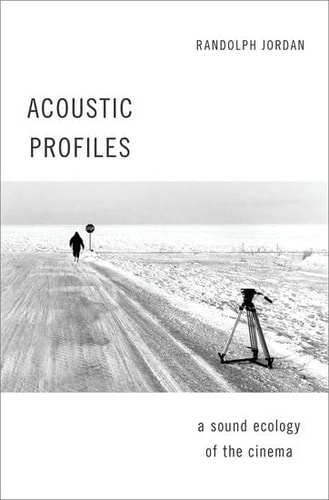
Acoustic Profiles: A Sound Ecology of the Cinema
0
0
As an Amazon Associate and affiliate partner, Menrva Books earns from qualifying purchases. Learn more
Author Description
In Acoustic Profiles, author Randolph Jordan proposes a new model for image-sound analysis that incorporates the vocabulary and methods of environmental studies, specifically exploring the potential of a model based on acoustic ecology. Jordan uses close readings of films to connect the diverse fields of architecture, environmental studies, art history, the history of modernity, and media studies through the tenets of acoustic ecology. In relating ways of thinking about sound from acoustic ecology to film studies and vice versa, Acoustic Profiles takes an interdisciplinary approach to inspire readers to experience cinematic art as a motivator of greater environmental purposes and to understand the role of the media in achieving those purposes.The book's method is referred to as acoustic profiling, a theoretical tool for hearing how filmmakers articulate spatial dimensions in their works. To that end, the book demonstrates how the creative use of media technologies in different fields can be understood relationally through the ecological issues that connect them, revivifying acoustic ecology for media studies while broadening the latter's ecological scope. The book provides a tool kit for readers to hear films with new ears, to think critically about this new listening practice, and to extend that engagement beyond the walls of the screening room by opening works of audiovisual media up to the consideration of soundscape research.
Menrva's Summary
THE THESIS
Can the principles of acoustic ecology provide a robust theoretical framework for analyzing the spatial and environmental dimensions of cinematic sound? Randolph Jordan, a scholar in media and sound studies, argues that by applying the methodologies of acoustic ecology to film analysis, researchers can uncover how filmmakers construct spatiality. He proposes a model called 'acoustic profiling' to bridge the gap between environmental studies and media theory, suggesting that cinema functions as a critical site for understanding our relationship with the sonic environment.
THE SCOPE MAP
What You Will Find
- A theoretical framework for 'acoustic profiling' in audiovisual media.
- Interdisciplinary synthesis of architecture, art history, and environmental science.
- Close readings of specific films to demonstrate soundscape analysis.
Scope Limits
- The text does not provide a comprehensive history of film sound technology.
- It does not focus on the technical engineering of sound recording or post-production software.
THE AUTHORITY PERSPECTIVE
Scholars in the field of media studies recognize this work as a significant contribution to the intersection of sound ecology and film theory. Readers frequently note the academic density of the prose, which serves as a specialized resource for researchers interested in the environmental implications of cinematic soundscapes.
Page Count:
256
Publication Date:
2023-01-01
Publisher:
Oxford University Press
ISBN-10:
0190226145
ISBN-13:
9780190226145
Music
Art History
Film Studies
Criticism history
Sound design
Acoustic Ecology
Media Studies
Community Tags
Similar Books