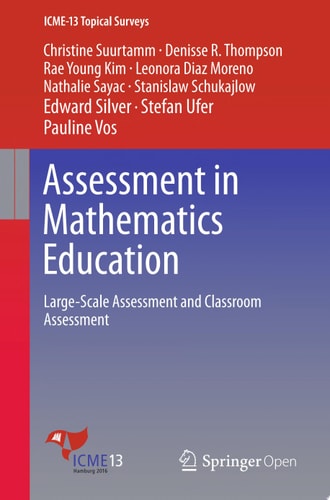
Assessment in Mathematics Education: Large-Scale Assessment and Classroom Assessment
0
0
As an Amazon Associate and affiliate partner, Menrva Books earns from qualifying purchases. Learn more
Author Description
This book provides an overview of current research on a variety of topics related to both large-scale and classroom assessment. First, the purposes, traditions and principles of assessment are considered, with particular attention to those common to all levels of assessment and those more connected with either classroom or large-scale assessment. Assessment design based on sound assessment principles is discussed, differentiating between large-scale and classroom assessment, but also examining how the design principles overlap. The focus then shifts to classroom assessment and provides specific examples of assessment strategies, before examining the impact of large-scale assessment on curriculum, policy, instruction, and classroom assessment. The book concludes by discussing the challenges that teachers currently face, as well as ways to support them. The book offers a common language for researchers in assessment, as well as a primer for those interested in understanding current work in the area of assessment. In summary, it provides the opportunity to discuss large-scale and classroom assessment by addressing the following main themes: ·Purposes, Traditions and Principles of Assessment ·Design of Assessment Tasks ·Classroom Assessment in Action ·Interactions of Large-Scale and Classroom Assessment ·Enhancing Sound Assessment Knowledge and Practices It also suggests areas for future research in assessment in mathematics education.
Menrva's Summary
THE THESIS
This book investigates the multifaceted landscape of assessment in mathematics education, examining the interplay between large-scale and classroom-based approaches. It considers the fundamental purposes, traditions, and principles that underpin all forms of assessment, while also highlighting distinctions and commonalities between large-scale and classroom assessment designs. The work delves into practical examples of classroom assessment strategies and analyzes the influence of large-scale assessments on curriculum, policy, and instructional practices. Finally, it addresses the challenges faced by educators and proposes avenues for enhancing assessment knowledge and practices, suggesting areas for future research.
THE SCOPE MAP
- Purposes, Traditions and Principles of Assessment
- Design of Assessment Tasks
- Classroom Assessment in Action
- Interactions of Large-Scale and Classroom Assessment
- Enhancing Sound Assessment Knowledge and Practices
- Challenges faced by teachers and ways to support them
- Suggestions for future research in assessment in mathematics education
THE AUTHORITY PERSPECTIVE
This book is presented as a comprehensive overview of current research in mathematics education assessment, aiming to provide a common language for researchers and a primer for those interested in the field. The structure suggests a thorough exploration of assessment principles, design, and practical application, with a focus on the relationship between large-scale and classroom contexts. The inclusion of challenges faced by teachers and future research directions indicates a practical and forward-looking perspective. The book's detailed thematic breakdown implies it serves as a valuable resource for understanding and advancing assessment practices in mathematics education.
Page Count:
38
Publication Date:
2016-07-07
Publisher:
Springer
ISBN-10:
3319323946
ISBN-13:
9783319323947
Non-Fiction
Instruction
Instructional Design
Education
Mathematics
Mathematics Education
Assessment
Curriculum
Community Tags
Similar Books




Reader Comments
Share Your Thoughts
No comments yet. Be the first to share your thoughts!