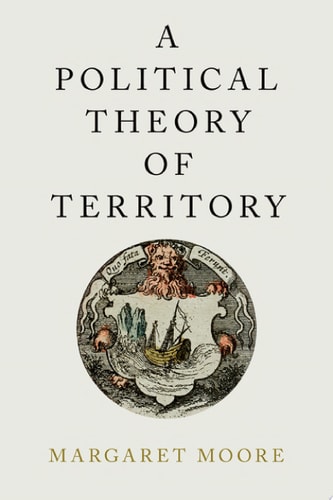
Political Theory of Territory
0
0
As an Amazon Associate and affiliate partner, Menrva Books earns from qualifying purchases. Learn more
Author Description
Our world is currently divided into territorial states that resist all attempts to change their borders. But what entitles a state, or the people it represents, to assume monopoly control over a particular piece of the Earth's surface? Why are they allowed to prevent others from entering? What if two or more states, or two or more groups of people, claim the same piece of land? Political philosophy, which has had a great deal to say about the relationship between state and citizen, has largely ignored these questions about territory. This book provides answers. It justifies the idea of territory itself in terms of the moral value of political self-determination; it also justifies, within limits, those elements that we normally associate with territorial rights: rights of jurisdiction, rights over resources, right to control borders and so on. The book offers normative guidance over a number of important issues facing us today, all of which involve territory and territorial rights, but which are currently dealt with by ad hoc reasoning: disputes over resources; disputes over boundaries, oceans, unoccupied islands, and the frozen Arctic; disputes rooted in historical injustices with regard to land; secessionist conflicts; and irredentist conflicts. In a world in which there is continued pressure on borders and control over resources, from prospective migrants and from the desperate poor, and no coherent theory of territory to think through these problems, this book offers an original, systematic, and sophisticated theory of why territory matters, who has rights over territory, and the scope and limits of these rights.
Menrva's Summary
THE THESIS
This book investigates the moral foundations of territorial rights and the justification for state control over specific geographic areas. Margaret Moore, a professor of political studies, utilizes a normative philosophical framework to address why states possess authority over land, resources, and borders. By linking territorial rights to the moral value of political self-determination, the author constructs a systematic theory to resolve complex geopolitical disputes that are often handled through inconsistent, ad hoc reasoning.
THE SCOPE MAP
What You Will Find
- A normative theory of territorial rights based on political self-determination
- Analysis of jurisdiction, resource control, and border management
- Application of theory to secessionist, irredentist, and historical land disputes
- Examination of contemporary challenges including migration and resource scarcity
Scope Limits
- The text does not provide a comprehensive history of every specific border conflict
- It does not offer a legal manual for international litigation
THE AUTHORITY PERSPECTIVE
Scholars and political theorists recognize this work as a significant contribution to the under-examined intersection of political philosophy and territorial sovereignty. Readers frequently note the academic density of the prose, which serves as a foundational text for those studying the ethical dimensions of state borders and global resource distribution.
Page Count:
276
Publication Date:
2015-01-01
Publisher:
Oxford University Press, Incorporated
ISBN-10:
0190222255
ISBN-13:
9780190222253
Governance
Territory national
Political Philosophy
State The
Ethics
Territorial Rights
International relations
Jurisdiction
Community Tags
Similar Books