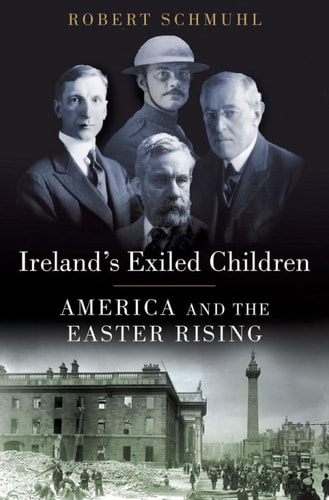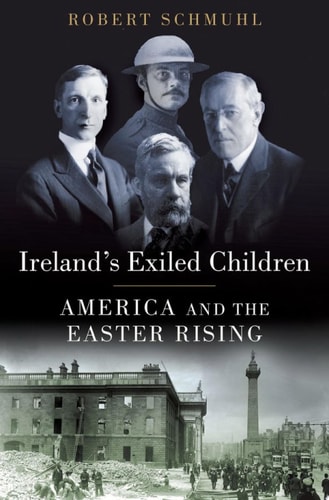
Ireland's Exiled Children
0
0
As an Amazon Associate and affiliate partner, Menrva Books earns from qualifying purchases. Learn more
Author Description
In Their Long Struggle For Independence From British Rule, Irish Republicans Had Long Looked West For Help, And With Reason. The Irish-american Population In The United States Was Larger Than The Population Of Ireland Itself, And The Bond Between The Two Cultures Was Visceral. Irish Exiles Living In America Provided Financial Support-and Often Much More Than That-but Also The Inspiration Of Example, Proof That A Life Independent Of England Was Achievable. Yet The Moment Of Crisis-terrible Beauty, As William Butler Yeats Put It-came In The Armed Insurrection During Easter Week 1916. Ireland's Exiled Children In America Were Acknowledged In The Proclamation Announcing The Provisional Government Of The Irish Republic, A Document Which Circulated In Dublin On The First Day Of The Rising. The United States Was The Only Country Singled Out For Offering Ireland Help. Yet The Moment Of The Uprising Was One Of War In Europe, And It Was Becoming Clear That America Would Join In The Alliance With France And Britain Against Germany. For Many Irish-americans, The Choice Of Loyalty To American Policy Or The Home Rule Cause Was Deeply Divisive. Based On Original Archival Research, Ireland's Exiled Children Brings Into Bold Relief Four Key Figures In The Irish-american Connection At This Fatal Juncture: The Unrepentant Fenian Radical John Devoy, The Driving Force Among The Irish Exiles In America; The American Poet And Journalist Joyce Kilmer, Whose Writings On The Rising Shaped Public Opinion And Guided Public Sympathy; President Woodrow Wilson, Descended From Ulster Protestants, Whose Antipathy To Irish Independence Matched That To British Imperialism; And The Only Leader Of The Rising Not Executed By The British-possibly Because Of His Having Been Born In America--Éamon De Valera. Each In His Way Contributed To America's Support Of And Response To The Rising, Informing The Larger Narrative And Broadly Reflecting Reactions To The Event And Its Bitter Aftermath.
Menrva's Summary
THE THESIS
This book investigates the complex, often contradictory influence of the Irish-American population on the Irish struggle for independence during the 1916 Easter Rising. Robert Schmuhl, a professor of American studies, utilizes extensive archival research to examine how the Irish diaspora in the United States provided critical financial and ideological support to the republican cause. He argues that the geopolitical tension of World War I forced a difficult choice upon Irish-Americans, pitting their loyalty to their new home against their ancestral commitment to Irish sovereignty.
THE SCOPE MAP
What You Will Find
- An analysis of the 1916 Easter Rising through the lens of American foreign policy and public opinion.
- Biographical profiles of John Devoy, Joyce Kilmer, Woodrow Wilson, and Éamon de Valera.
- An examination of the Proclamation of the Irish Republic and its specific mention of American assistance.
Scope Limits
- The text does not provide a comprehensive military history of the Easter Rising itself.
- It does not cover the entirety of the Irish revolutionary period beyond the immediate context of the 1916 insurrection and its direct aftermath.
THE AUTHORITY PERSPECTIVE
Scholars and historians recognize this work as a focused study on the intersection of transatlantic politics and the Irish diaspora. Readers frequently note the clarity of the prose and the author's ability to synthesize disparate historical figures into a cohesive narrative regarding the 1916 period.
Page Count:
224
Publication Date:
2016-01-01
Publisher:
Oxford University Press
ISBN-10:
0190224290
ISBN-13:
9780190224295
Biography
History
Irish History
20th Century
American History
Community Tags
Similar Books