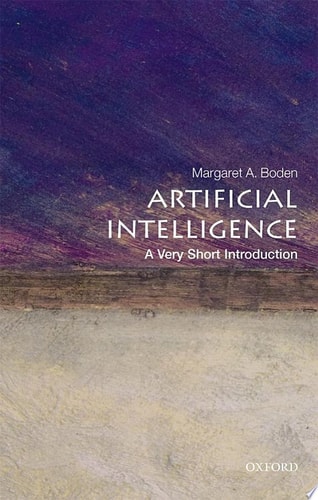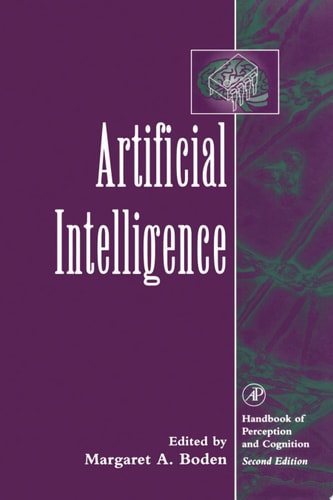
Artificial Intelligence
0
0
As an Amazon Associate and affiliate partner, Menrva Books earns from qualifying purchases. Learn more
Author Description
Artificial Intelligence is the study of how to build or program computers to enable them to do what minds can do. This volume discusses the ways in which computational ideas and computer modeling can aid our understanding of human and animal minds. Major theoretical approaches are outlined, as well as some promising recent developments. Fundamental philosophical questions are discussed along with topics such as: the differences between symbolic and connectionist AI, planning and problem solving, knowledge representation, learning, expert systems, vision, natural language, creativity, and human-computer interaction. This volume is suitable for any psychologist, philosopher, or computer scientist wanting to know the current state of the art in this area of cognitive science. - Up-to-date account of how computational ideas and techniques are relevant to psychology - Includes discussions of "classical" (symbolic) AI, of connectionism (neural nets), of evolutionary programming, and of A-Life - Discusses a wide range of psychology from low-level vision to creativity
Menrva's Summary
THE THESIS
This book investigates how computational ideas and computer modeling can illuminate the workings of human and animal minds. Margaret A. Boden, a prominent figure in cognitive science, draws upon her expertise to present a comprehensive overview of Artificial Intelligence (AI). The volume explores major theoretical approaches, including symbolic AI and connectionism, and discusses recent developments in areas such as planning, knowledge representation, learning, and natural language processing. It addresses fundamental philosophical questions surrounding AI and its relevance to understanding cognition, suitable for professionals in psychology, philosophy, and computer science.
THE SCOPE MAP
- Explores the fundamental concept of AI as building or programming computers to perform tasks associated with minds.
- Details major theoretical approaches in AI, contrasting symbolic AI with connectionist models (neural networks).
- Covers key AI subfields including planning, problem-solving, knowledge representation, and machine learning.
- Discusses the development and application of expert systems.
- Examines AI's role in perception, specifically vision and natural language understanding.
- Addresses topics such as creativity and human-computer interaction.
- Includes discussions on evolutionary programming and Artificial Life (A-Life).
- Suitable for psychologists, philosophers, and computer scientists interested in cognitive science.
THE AUTHORITY PERSPECTIVE
This volume is recognized as an up-to-date account of how computational ideas and techniques are relevant to psychology and cognitive science. It is noted for its inclusion of discussions on both 'classical' symbolic AI and newer approaches like connectionism, evolutionary programming, and A-Life. The book covers a wide range of psychological topics, from low-level vision to creativity, making it a valuable resource for professionals in related fields. Its comprehensive scope and clear explanations make it a foundational text for understanding the state of the art in AI as it relates to the mind.
Page Count:
376
Publication Date:
1996-06-20
Publisher:
Elsevier
ISBN-10:
0080527590
ISBN-13:
9780080527598
Science
Non-Fiction
Philosophy
Psychology
Computer Science
Community Tags
Similar Books