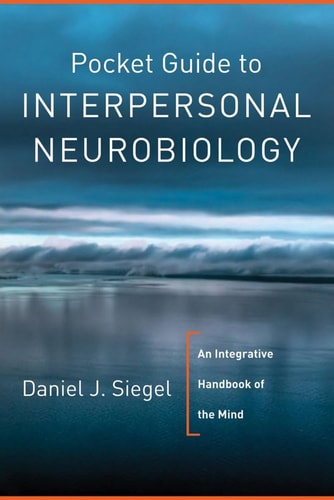
Pocket Guide to Interpersonal Neurobiology: An Integrative Handbook of the Mind
0
0
As an Amazon Associate and affiliate partner, Menrva Books earns from qualifying purchases. Learn more
Author Description
The central concepts of the theory of interpersonal neurobiology. Many fields have explored the nature of mental life from psychology to psychiatry, literature to linguistics. Yet no common “framework” where each of these important perspectives can be honored and integrated with one another has been created in which a person seeking their collective wisdom can find answers to some basic questions, such as, What is the purpose of life? Why are we here? How do we know things, how are we conscious of ourselves? What is the mind? What makes a mind healthy or unwell? And, perhaps most importantly: What is the connection among the mind, the brain, and our relationships with one another? Our mental lives are profoundly relational. The interactions we have with one another shape our mental world. Yet as any neuroscientist will tell you, the mind is shaped by the firing patterns in the brain. And so how can we reconcile this tension—that the mind is both embodied and relational? Interpersonal Neurobiology is a way of thinking across this apparent conceptual divide. This Pocket Guide to Interpersonal Neurobiology is designed to aid in your personal and professional application of the interpersonal neurobiology approach to developing a healthy mind, an integrated brain, and empathic relationships. It is also designed to assist you in seeing the intricate foundations of interpersonal neurobiology as you read other books in the Norton Series on Interpersonal Neurobiology. Praise for Daniel J. Siegel's books: “Siegel is a must-read author for anyone interested in the science of the mind.” —Daniel Goleman, author of Social Intelligence: The New Science of Human Relationships “[S]tands out for its skillful weaving together of the interpersonal, the inner world, the latest science, and practical applications.” —Jack Kornfield, PhD, founding teacher of the Insight Meditation Society and Spirit Rock Center, and au
Menrva's Summary
THE THESIS
This guide seeks to unify diverse fields of study into a cohesive framework for understanding the mind. Daniel J. Siegel, a clinical professor of psychiatry, presents Interpersonal Neurobiology (IPN) as a way to bridge the gap between the mind's embodied nature and its relational aspects. The book addresses fundamental questions about the purpose of life, consciousness, and the health of the mind, drawing on insights from psychology, psychiatry, literature, and linguistics. It aims to provide a practical application of IPN for developing an integrated brain, a healthy mind, and empathic relationships.
THE SCOPE MAP
- Exploration of the central concepts of Interpersonal Neurobiology.
- Integration of perspectives from psychology, psychiatry, literature, and linguistics.
- Discussion on the nature of mental life, consciousness, and the mind.
- Examination of what constitutes a healthy versus an unwell mind.
- Analysis of the connection between the mind, the brain, and interpersonal relationships.
- Guidance for personal and professional application of IPN.
- Assistance in understanding the foundations of IPN for readers of related works.
THE AUTHORITY PERSPECTIVE
Daniel J. Siegel's work is highly regarded within fields concerned with the science of the mind, with endorsements noting his skillful weaving of interpersonal dynamics, inner experience, scientific findings, and practical applications. The book is positioned as a key resource for understanding the intricate foundations of interpersonal neurobiology, serving both as a standalone guide and a companion to a broader series. Its approach is recognized for its ability to bridge conceptual divides, offering a unified perspective on mental life.
Page Count:
560
Publication Date:
2012-04-02
Publisher:
W. W. Norton & Company
ISBN-10:
039370713X
ISBN-13:
9780393707137
Personal Development
Psychology
Science
Self-help
Non-Fiction
Neuroscience