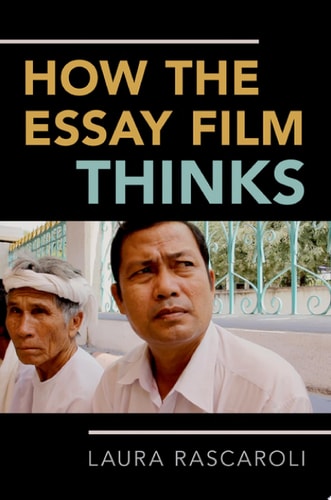
How the Essay Film Thinks
0
0
As an Amazon Associate and affiliate partner, Menrva Books earns from qualifying purchases. Learn more
Author Description
This book offers a novel understanding of the epistemological strategies that are mobilized by the essay film, and of where and how such strategies operate. Against the backdrop of Adorno's discussion of the essay form's anachronistic, anti-systematic and disjunctive mode of resistance, and capitalizing on the centrality of the interstice in Deleuze's understanding of the cinema as image of thought, the book discusses the essay film as future philosophy-as a contrarian, political cinema whose argumentation engages with us in a space beyond the verbal. A diverse range of case studies discloses how the essay film can be a medium of thought on the basis of its dialectic use of audiovisual interstitiality. The book shows how the essay film's disjunctive method comes to be realized at the level of medium, montage, genre, temporality, sound, narration, and framing-all of these emerging as interstitial spaces of intelligence that illustrate how essayistic meaning can be sustained, often in contexts of political, historical or cultural extremity. The essayistic urge is not to be identified with a fixed generic form, but is rather situated within processes of filmic thinking that thrive in gaps.
Menrva's Summary
THE THESIS
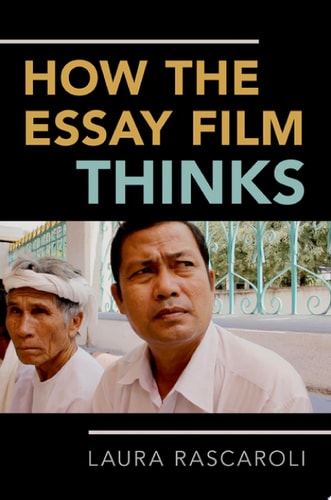
How does the essay film function as a distinct medium of philosophical thought and political resistance? Laura Rascaroli, a scholar in film and media studies, investigates the epistemological strategies inherent in the essay film genre. By synthesizing Theodor Adorno’s theories on the essay form with Gilles Deleuze’s concepts of cinema as an image of thought, the author argues that these films operate through interstitial spaces to challenge systematic logic and engage in contrarian, non-verbal argumentation.
THE SCOPE MAP
What You Will Find
- Analysis of the essay film as a form of future philosophy
- Theoretical framework centered on audiovisual interstitiality
- Examination of montage, temporality, sound, and framing as sites of intelligence
- Diverse case studies illustrating essayistic thinking in political and historical contexts
Scope Limits
- Does not provide a comprehensive history of the essay film genre
- Does not focus on mainstream narrative cinema or traditional documentary structures
THE AUTHORITY PERSPECTIVE
Scholars and film theorists identify this work as a rigorous contribution to the study of cinematic epistemology and the essayistic form. Readers frequently note the academic density of the prose, which requires a foundational understanding of continental philosophy and film theory to fully grasp the author's arguments.
Page Count:
224
Publication Date:
2017-06-02
Publisher:
Oxford University Press
ISBN-10:
0190238259
ISBN-13:
9780190238254
Philosophy
Non-Fiction
Film Studies
Motion pictures
Cinematic Arts
Documentary films
Media Theory
Community Tags
Other Editions(2)
Similar Books