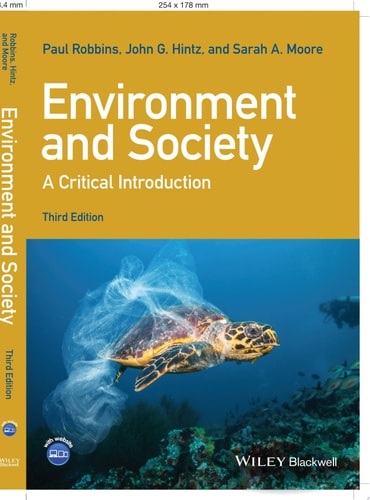
Environment and Society: A Critical Introduction
0
0
As an Amazon Associate and affiliate partner, Menrva Books earns from qualifying purchases. Learn more
Author Description
A comprehensive yet accessible introduction to the conceptual tools used to explore real-world environmental problems Environment and Society: A Critical Introduction, Third Edition demonstrates how theoretical approaches such as environmental ethics, political economy, and social construction work as conceptual tools to identify and clarify contemporary environmental issues. Assuming no background knowledge in the subject, this reader-friendly textbook uses clear language and engaging examples to first describe nine key conceptual tools, and then apply them to a variety of familiar objects—from bottled water and French fries to trees, wolves, and carbon dioxide. Throughout the text, highly accessible chapters provide insight into the relationship between the environment and present-day society. Divided into two parts, the text begins by explaining major theoretical approaches for interpreting the environment-society relationship and discussing different perspectives about environmental problems. Part II examines a series of objects, each viewed through a sample of the theoretical tools from Part I, helping readers think critically about critical environmental topics such as deforestation, climate change, the global water supply, and hazardous e-waste. This fully revised third edition stresses a wider range of competing ways of thinking about environmental issues and features additional cases studies, up-to-date conceptual understandings, and new chapters in Part I on racializd environments and feminist approaches. Environment and Society: A Critical Introduction, Third Edition: Covers theoretical lenses such as commodities, environmental ethics, and risks and hazards, and applies them to touchstone environment-society objects like wolves, tuna, trees, and carbon dioxide Uses a conversational narrative to explain key historical events, topical issues and policies, and scientific concepts Featu
Menrva's Summary
THE THESIS
This textbook investigates the conceptual frameworks used to understand and address contemporary environmental problems. The authors, John G. Hintz, Paul Robbins, and Sarah A. Moore, draw upon their expertise to present a comprehensive yet accessible introduction to theoretical approaches such as environmental ethics, political economy, and social construction. The book applies these tools to familiar objects and issues, ranging from bottled water and French fries to trees, wolves, and carbon dioxide, demonstrating their utility in clarifying complex environmental challenges. It is structured to guide readers from understanding major theoretical approaches to examining specific environmental topics like deforestation, climate change, and global water supply.
THE SCOPE MAP
- Explains nine key conceptual tools for analyzing environmental issues.
- Applies theoretical lenses to familiar objects such as bottled water, trees, and carbon dioxide.
- Examines critical environmental topics including deforestation, climate change, and hazardous e-waste.
- Discusses theoretical approaches like environmental ethics, political economy, and social construction.
- Features new chapters on racialized environments and feminist approaches in the third edition.
- Uses clear language and engaging examples suitable for readers with no prior background knowledge.
- Covers theoretical lenses such as commodities, environmental ethics, and risks and hazards.
- Provides insight into the relationship between the environment and present-day society.
THE AUTHORITY PERSPECTIVE
This text is designed as a reader-friendly textbook, aiming to provide accessible yet comprehensive coverage of environmental sociology and theory. Its structure, moving from theoretical frameworks to applied case studies, suggests an pedagogical approach focused on critical thinking and the application of concepts. The inclusion of updated theoretical perspectives and diverse case studies indicates an effort to engage with current scholarship and contemporary environmental challenges.
Page Count:
400
Publication Date:
2022-04-04
Publisher:
John Wiley & Sons
ISBN-10:
1119408237
ISBN-13:
9781119408239
Non-Fiction
Science
Sociology
Critical Theory
Community Tags
Other Editions(2)
Similar Books









Reader Comments
Share Your Thoughts
No comments yet. Be the first to share your thoughts!