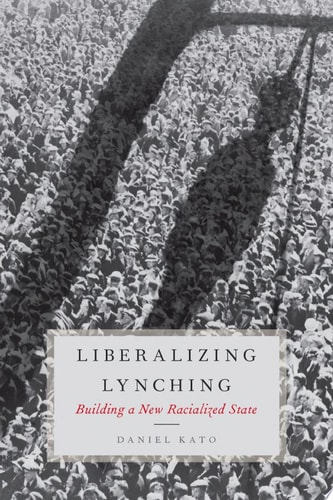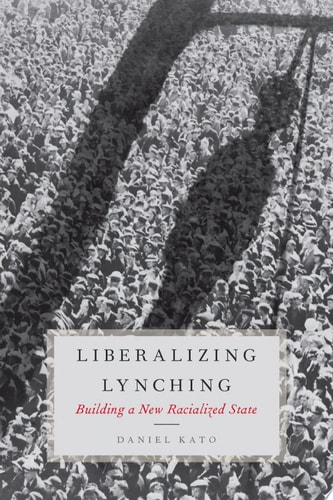
Liberalizing Lynching: Building a New Racialized State
0
0
As an Amazon Associate and affiliate partner, Menrva Books earns from qualifying purchases. Learn more
Author Description
In Spite Of America's Identity As A Liberal Democracy, The Vile Act Of Lynching Happened Frequently In The Southern United States Over The Course Of The Nation's History. Indeed, Lynchings Were Very Public Events, And Were Even Advertised In Newspapers, Begging The Question Of How Such A Brazen Disregard For The Law Could Have Occurred So Freely And Openly. Liberalizing Lynching: Building A New Racialized State Seeks To Explain The Seemingly Paradoxical Relationship Between The American Liberal Regime And The Illiberal Act Of Lynching. Drawing On Legal Cases, Congressional Documents, Presidential Correspondence, And Newspaper Reports, Daniel Kato Explores The Federal Government's Pattern Of Non-intervention Regarding Lynchings Of African Americans From The Late Nineteenth Century Through The 1960s. Although Popular Belief Holds That The Federal Government Was Unable To Address Racial Violence In The South, This Book Argues That The Actions And Decisions Of The Federal Government From The 1870s Through The 1960s Reveal That Federal Inaction Was Not Primarily A Consequence Of Institutional Or Legal Incapacities, But Rather A Decision That Was Supported And Maintained By All Three Branches Of The Federal Government. Inaction Stemmed From The Decision Not To Intervene, Not The Powerlessness Of The Federal Government. To Cement His Argument, Kato Develops The Theory Of Constitutional Anarchy, Which Crystallizes The Ways In Which Federal Government Had The Capacity To Intervene, Yet Relinquished Its Responsibility While Nonetheless Maintaining Authority. A Bold Challenge To Conventional Knowledge About Lynching, Liberalizing Lynching Will Serve As A Useful Tool For Students And Scholars Of Political Science, Legal History, And African American Studies.
Menrva's Summary
THE THESIS
This book investigates the paradoxical relationship between the American liberal democratic regime and the systemic, public practice of lynching in the Southern United States. Daniel Kato, a scholar of political science, challenges the prevailing narrative that federal inaction regarding racial violence was a result of institutional incapacity. By analyzing legal cases, congressional records, and presidential correspondence, Kato argues that the federal government possessed the capacity to intervene but consciously chose not to, effectively maintaining authority while relinquishing responsibility through a framework he terms constitutional anarchy.
THE SCOPE MAP
What You Will Find
- Analysis of federal non-intervention patterns from the 1870s through the 1960s.
- The development of the theory of constitutional anarchy as a political mechanism.
- Examination of primary source materials including presidential correspondence and congressional documents.
Scope Limits
- The study focuses specifically on the federal government's role and does not provide an exhaustive history of local or state-level law enforcement dynamics.
- The analysis is bounded by the late nineteenth century through the 1960s.
THE AUTHORITY PERSPECTIVE
Scholars and students of political science and legal history identify this work as a significant challenge to conventional understandings of federal power and racial violence. Readers frequently note the academic density of the prose and the rigor of the author's institutional analysis.
Page Count:
272
Publication Date:
2015-01-01
Publisher:
Oxford University Press
ISBN-10:
0190232587
ISBN-13:
9780190232580
Legal History
Sociology
American History
African American