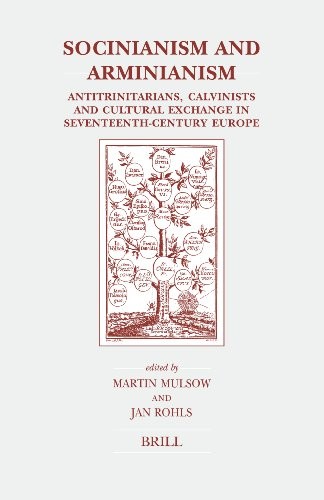
Socinianism and Arminianism
0
0
As an Amazon Associate and affiliate partner, Menrva Books earns from qualifying purchases. Learn more
Author Description
Socinianism has often been studied in national contexts and apart from other currents like Arminianism. This volume is especially interested in the "in-betweens": the relationship of Anti-trinitarianism to "liberal" currents in reformed Protestantism, namely Dutch Remonstrants, English Latitudinarians and some French Huguenots. This in-between also has a local aspect: the volume studies the transformations that Antitrinitarianism experienced in the complicated transition from its origins in Italy and its refuge in Poland, Moravia and Transsylvania to Prussia, to the Netherlands and later to England. What effects did this transfer have on the dynamics of pluralization in the progressive Netherlands? How did the Socinians overcome social adaptation from a group of exiles to a diffuse movement of modernization? How did they manage to connect within the new milieu of Arminians, Cartesians, Spinozists and Lockeans?--Jacket.
Menrva's Summary
THE THESIS
This volume investigates the complex and often overlooked connections between Socinianism and Arminianism, particularly focusing on their shared 'in-between' spaces and the transformations they underwent during their geographical and intellectual transfers. The book examines the relationship between Anti-trinitarianism and more 'liberal' currents within reformed Protestantism, such as Dutch Remonstrants, English Latitudinarians, and French Huguenots. It traces the evolution of Antitrinitarianism from its Italian origins through its refuges in Poland, Moravia, and Transylvania, to its later presence in Prussia, the Netherlands, and England, analyzing the impact of these transfers on pluralization dynamics and social adaptation.
THE SCOPE MAP
- Analysis of the relationship between Anti-trinitarianism and liberal reformed Protestantism.
- Exploration of the geographical transfer of Socinianism from Italy to Central and Western Europe.
- Examination of the social adaptation of Socinians from exiles to agents of modernization.
- Investigation of connections formed between Socinians and other intellectual movements like Arminianism, Cartesianism, Spinozism, and Lockean thought.
- Focus on the 'in-between' spaces and transitional dynamics of religious and intellectual currents.
- Case studies of Socinianism's impact in the Netherlands and England.
THE AUTHORITY PERSPECTIVE
This volume is recognized for its detailed examination of the transnational and inter-denominational aspects of early modern religious thought, moving beyond nationalistic or isolated studies of Socinianism and Arminianism. Scholars likely appreciate its nuanced approach to tracing the intellectual and social transformations these movements underwent as they migrated across Europe. The book's focus on the 'in-between' spaces offers a fresh perspective on the development of liberal Protestantism and its connections to radical reform movements. It provides valuable insights into the complex dynamics of pluralization and modernization within progressive intellectual milieus.
Page Count:
306
Publication Date:
2005-01-01
ISBN-10:
9004147152
Non-Fiction
History
Reformation Studies
Religious History
Intellectual History
Theology
Community Tags
Similar Books