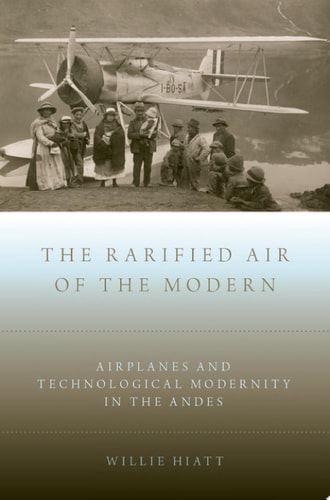
The Rarified Air of the Modern
0
0
As an Amazon Associate and affiliate partner, Menrva Books earns from qualifying purchases. Learn more
Author Description
From The Moment News Reached Peru In 1910 That Jorge Chávez Dartnell, A Pilot Of Peruvian Parentage, Had Become The First Man To Fly Across The Alps, Aviation Fired The Imagination Of The Masses In His Home Country. His And Other Peruvian Pilots' Achievements Generated Great Optimism That This Technology Could Lift Peru Out Of Its Self-perceived Backwardness And Transform It Into A Modern Nation. Though Poor Infrastructure, Economic Woes, A Dearth Of Technical Expertise, And Frequent Pilot Deaths Slowed Peru's Domestic Aviation Project, Diverse Groups Saw In Airplanes Their Own Visions For Peruvian Renewal. In This Book, Willie Hiatt Shows How Politicians, Businessmen, And Military Officials Promoted The Project As Critical To The Nation. At The Same Time, Indigenous Communities And Provincial Residents Willingly Gave Up Land For Airfields, Raised Money To Purchase Aircraft For The Military, Named Airplanes After Sponsoring Civic Groups, Towns, And Regions, And Breached Police Cordons At Flying Exhibitions To Get Close-up Looks At Planes And Pilots. By 1928, Three Commercial Lines Were Transporting Passengers And Goods From Far-flung Regions Of The Amazon, Highlands, And Coast To Lima And Beyond. Tracing The Development Of Peruvian Aviation From Heroic Individual Feats To Essential Infrastructure, The Rarified Air Of The Modern Shows How Peruvians Mobilized Airplanes To Reflect Their Technological Progress, Their Modern Identity, And Their Nation's Intertwining With The History Of The West.
Menrva's Summary
THE THESIS
This book investigates how the introduction of aviation in early 20th-century Peru served as a catalyst for national identity and a perceived path toward modernization. Willie Hiatt, a historian specializing in Latin American studies, utilizes archival records and regional accounts to examine the intersection of technological adoption and state-building. He argues that aviation was not merely a military or commercial tool, but a symbolic project that diverse Peruvian social groups embraced to redefine their nation's place in the global order.
THE SCOPE MAP
What You Will Find
- Historical analysis of Peruvian aviation from 1910 to 1928.
- Examination of the social, political, and economic motivations behind airfield construction.
- Case studies on how indigenous and provincial communities participated in the aviation project.
- Documentation of the transition from individual heroic flight to commercial infrastructure.
Scope Limits
- The study focuses primarily on the early developmental period of Peruvian aviation rather than contemporary aerospace developments.
- It does not provide a technical manual for aircraft maintenance or flight operations.
THE AUTHORITY PERSPECTIVE
Scholars in Latin American history recognize this work as a detailed examination of how technology shapes national identity in developing nations. Readers frequently note the author's ability to synthesize local community involvement with broader geopolitical trends in the history of the West.
Page Count:
256
Publication Date:
2016-01-01
Publisher:
Oxford University Press
ISBN-10:
0190248912
ISBN-13:
9780190248918
History
Aviation History
American History
Peru
Modernization
Technology
Community Tags
Similar Books