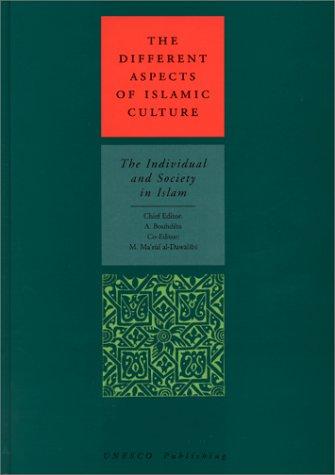
The Individual and Society in Islam
0
0
As an Amazon Associate and affiliate partner, Menrva Books earns from qualifying purchases. Learn more
Author Description
The second volume looks at living Islam, the everyday practicalities rather than the eternal principles of the Muslim faith. It is a highly topical volume, with chapters on politics, economics, human rights and the emancipation of women. The role of the individual Muslim in the community is discussed. Islamic jurisprudence (fiqh) is studied in its attempt to achieve the goals of rationality, universality and equality set out in the Koran. Islamic society should be a reflection of these ideals, with individuals trying to satisfy God by going beyond worship and ritual and actually living in an Islamic way. A Muslim does not just have faith, he or she is faith. This volume shows the adaptability of Islam and its ability to take into account local traditions, which has allowed the faith to spread far afield to India, Africa and Europe. It also describes how, more recently, education has begun to take an increasingly important role in guiding Muslims, giving them confidence in their own values, and imbuing them with their faith. (http://www.unesco.org/culture/aic/).
Menrva's Summary
THE THESIS
This volume explores the practical application of Islam in the daily lives of individuals and societies, moving beyond abstract principles to examine its lived realities. It delves into contemporary issues such as politics, economics, human rights, and the evolving role of women, discussing how Islamic jurisprudence (fiqh) strives for rationality, universality, and equality as outlined in the Quran. The text posits that Islamic society should embody these ideals, with individuals actively living their faith beyond mere ritual. It highlights Islam's capacity for adaptation to local traditions, which has facilitated its global spread, and notes the increasing influence of education in shaping contemporary Muslim identity and values.
THE SCOPE MAP
- Analysis of contemporary Islamic societies focusing on practical application of faith.
- Chapters dedicated to politics, economics, human rights, and women's emancipation within Islam.
- Study of Islamic jurisprudence (fiqh) and its pursuit of Quranic ideals like rationality, universality, and equality.
- Discussion on the individual Muslim's role and identity within the community.
- Exploration of Islam's adaptability to local traditions and its historical global expansion.
- Examination of the role of education in modern Muslim life and identity formation.
THE AUTHORITY PERSPECTIVE
This work is presented as a topical examination of living Islam, focusing on its practical implications in contemporary society. The description highlights its engagement with issues of politics, economics, human rights, and women's emancipation, suggesting a comprehensive overview of how Islamic principles are applied and adapted. The text emphasizes Islam's historical adaptability and its ongoing evolution, particularly in response to education. The framing indicates an analytical approach to understanding the dynamic relationship between Islamic faith, individual practice, and societal structures.
Page Count:
484
Publication Date:
1998-01-01
ISBN-10:
9231027425
Religion
Economics
Non-Fiction
Human rights
Sociology
Islam
Community Tags
Similar Books