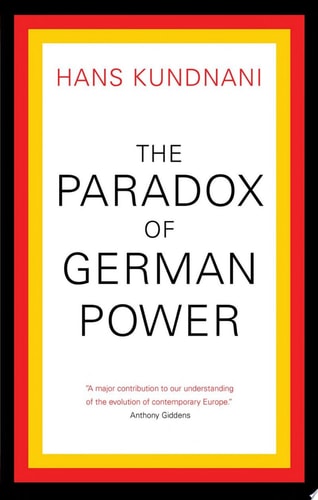
The Paradox of German Power
0
0
As an Amazon Associate and affiliate partner, Menrva Books earns from qualifying purchases. Learn more
Author Description
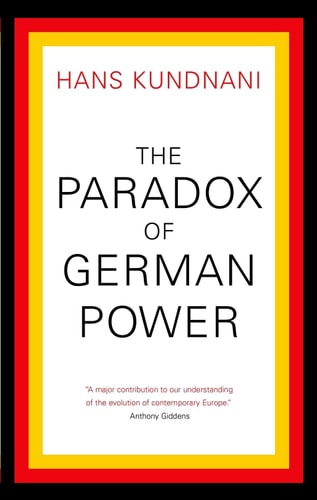
Since the Euro crisis began, Germany has emerged as Europe's dominant power. During the last three years, German Chancellor Angela Merkel has been compared with Bismarck and even Hitler in the European media. And yet few can deny that Germany today is very different from the stereotype of nineteenth- and twentieth-century history. After nearly seventy years of struggling with the Nazi past, Germans think that they more than anyone have learned its lessons. Above all, what the new Germany thinks it stands for is peace. Germany is unique in this combination of economic assertiveness and military abstinence. So what does it mean to have a "German Europe" in the twenty-first century?In The Paradox of German Power, Hans Kundnani explains how Germany got to where it is now and where it might go in future. He explores German national identity and foreign policy through a series of tensions in German thinking and action: between continuity and change, between "normality" and "abnormality," between economics and politics, and between Europe and the world.
Menrva's Summary
THE THESIS
This book investigates the central contradiction of modern Germany: how a nation defined by economic dominance and a commitment to peace navigates its role as the primary power in Europe. Hans Kundnani, a senior research fellow and expert in European foreign policy, utilizes historical analysis and contemporary political observation to argue that Germany's unique position creates significant friction within the European Union. He examines how the nation balances its post-war identity of military restraint with the necessity of exerting influence in a globalized economic landscape.
THE SCOPE MAP
What You Will Find
- Analysis of German foreign policy shifts since the Euro crisis
- Examination of the tension between German economic power and military abstinence
- Historical context regarding Germany's post-war identity and the legacy of the Nazi era
- Frameworks for understanding the 'German Europe' concept
Scope Limits
- Does not provide a predictive model for future German elections
- Does not focus on domestic social policy outside of its impact on foreign relations
THE AUTHORITY PERSPECTIVE
Experts and political analysts frequently cite this work as a foundational text for understanding the complexities of contemporary German hegemony. Readers often note the clarity of the prose, which makes dense geopolitical theory accessible to both students and policy professionals.
Page Count:
156
Publication Date:
2015-01-14
Publisher:
Oxford University Press
ISBN-10:
0190245506
ISBN-13:
9780190245504
Economics
Germany economic conditions
Europe
European History
Memory
German Politics
International relations
National Characteristics German
Pace University