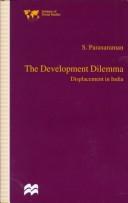
The Development Dilemma
0
0
As an Amazon Associate and affiliate partner, Menrva Books earns from qualifying purchases. Learn more
Author Description
Using as its basis the experiences of six major development projects attempted in India since independence, this book assesses the role of state, international agencies and the private industrial sector in promoting development and managing the rehabilitation of displaced people.
Menrva's Summary
THE THESIS
This book investigates the complex interplay between state, international agencies, and the private sector in managing large-scale development projects and their impact on displaced populations in India. Drawing on the author's expertise and detailed case studies of six major development projects undertaken in India since its independence, the book critically examines the effectiveness and ethical considerations of development strategies. It specifically focuses on the challenges and outcomes related to the rehabilitation of individuals and communities displaced by these projects, highlighting the often-overlooked human cost of progress.
THE SCOPE MAP
- Analysis of six major development projects in India since independence.
- Assessment of the roles played by the state, international agencies, and the private industrial sector.
- Examination of strategies for managing the rehabilitation of displaced people.
- Case studies detailing the practical implementation and consequences of development initiatives.
THE AUTHORITY PERSPECTIVE
This work is likely regarded as a significant contribution to the study of development economics and policy in India, offering a critical perspective on the practical outcomes of large-scale projects. The author's focus on the rehabilitation of displaced populations provides a crucial, often under-examined, dimension to the discourse on development. The book's empirical grounding in specific Indian case studies suggests it is a valuable resource for academics, policymakers, and students interested in the socio-economic impacts of development.
Page Count:
299
Publication Date:
1999-01-01
ISBN-10:
0312220103
ISBN-13:
9780312220105
Economics
Non-Fiction
History
Politics
Sociology
Public Policy
Community Tags
Similar Books