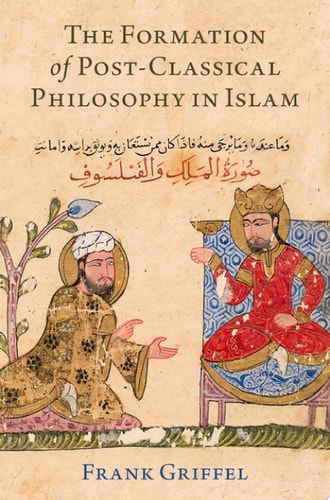
The Formation of Post-Classical Philosophy in Islam
0
0
As an Amazon Associate and affiliate partner, Menrva Books earns from qualifying purchases. Learn more
Author Description
Scholars have come to recognize the importance of classical Islamic philosophy both in its own right and in its preservation of and engagement with Greek philosophical ideas. At the same time, the period immediately following the so-called classical era has been considered a sort of dark age, in which Islamic thought entered a long decline. In this monumental new work, Frank Griffel seeks to overturn this conventional wisdom, arguing that what he calls the "post-classical" period has been unjustly maligned and neglected by previous generations of scholars. The Formation of Post-Classical Philosophy in Islam is a comprehensive study of the far-reaching changes that led to a re-shaping of the philosophical discourse in Islam during the twelfth century. Earlier Western scholars thought that Islam's engagement with the tradition of Greek philosophy ended during that century. More recent analyses suggest that Islamic thinkers instead integrated Greek thought into the genre of rationalist Muslim theology (kalām). Griffel argues that even this new view misses a key point. In addition to the integration of Greek ideas into kalām, Muslim theologians picked up the discourse of classical philosophy in Islam (falsafa) and began to produce books in the tradition of Plato, Aristotle, and Avicenna—a new and oft-misunderstood genre they called "ḥikma"—in which they left aside theological concerns. They wrote in both genres, kalām and ḥikma, and the same writers argued for opposing teachings on the nature of God, the world's creation, and the afterlife depending on the genre in which they were writing. Griffel shows how careful attention to genre demonstrates both the coherence and ambiguity of this new philosophical approach. A work of extraordinary breadth and depth, The Formation of Post-Classical Philosophy in Islam offers a detailed, insightful history of philosophy in Iraq, Iran, and Central Asia during the twelfth century. It will be essential reading for anyone interested in
Menrva's Summary
THE THESIS
How did the philosophical landscape of the Islamic world evolve during the twelfth century, and why has this period been historically mischaracterized as a decline? Frank Griffel, a scholar of Islamic intellectual history, challenges the narrative of a post-classical 'dark age' by examining the structural shifts in philosophical discourse. He argues that rather than abandoning Greek thought, twelfth-century thinkers developed a dual-genre approach—integrating philosophy into both rationalist theology (kalām) and a distinct, non-theological tradition known as ḥikma.
THE SCOPE MAP
What You Will Find
- Analysis of the transition from classical falsafa to the post-classical ḥikma genre.
- Examination of the intellectual centers of Iraq, Iran, and Central Asia.
- Comparative study of how individual authors navigated conflicting arguments across different literary genres.
Scope Limits
- The study focuses primarily on the twelfth century and does not provide an exhaustive history of Islamic philosophy beyond this specific era.
- The text assumes a foundational knowledge of Islamic theology and classical Greek philosophical concepts.
THE AUTHORITY PERSPECTIVE
Scholars recognize this work as a significant intervention in the study of Islamic intellectual history, particularly for its rigorous focus on genre as a key to understanding philosophical coherence. Readers frequently note the academic density of the prose, which is intended for specialists and advanced students of philosophy and theology.
Page Count:
661
Publication Date:
2021-01-01
Publisher:
Oxford University Press
ISBN-10:
019088634X
ISBN-13:
9780190886349
History
Religion
Philosophy
Middle Eastern
Philosophy history
Theology
Islamic Studies
Community Tags
Similar Books