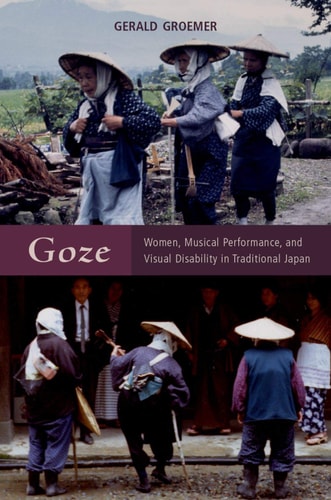
Goze: Women, Musical Performance, and Visual Disability in Traditional Japan
0
0
As an Amazon Associate and affiliate partner, Menrva Books earns from qualifying purchases. Learn more
Author Description
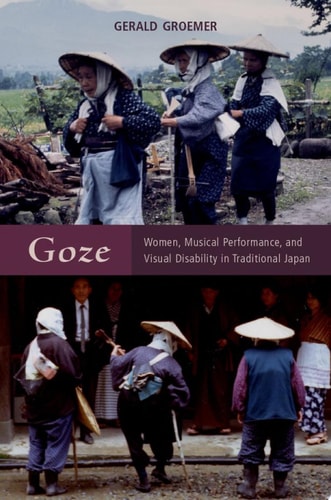
In a tradition extending from the medieval era to the early twentieth century, visually disabled Japanese women known as goze toured the countryside as professional singers. An integral part of rural musical culture, the goze sang unique narratives of their own making and a significant repertory of popular ballads and short songs. Goze activities peaked in the nineteenth century, and some women continued to tour well into the middle of the twentieth. The last active goze lived until 2005.In Goze: Women, Musical Performance, and Visual Disability in Traditional Japan, Gerald Groemer examines the way of life, institutions, and songs of these itinerant performers. Groemer shows that the solidarity and success goze achieved with the rural public through narrative and music was based on the convergence of the goze's desire for a degree of social and economic autonomy with the audience's wish to mitigate the cultural deprivation it so often experienced. Goze recognized audiences as a stimulus for developing repertories and careers; the public in turn recognized goze as masterful artisans who acted as powerful agents of widespread cultural development.As the first full-length scholarly work on goze in English, this book is an invaluable resource to scholars and students of Japanese culture, Japanese music, ethnomusicology, and disability studies worldwide.
Menrva's Summary
THE THESIS
This work investigates the historical role, social organization, and musical contributions of goze, visually impaired female itinerant performers in traditional Japan. Gerald Groemer, a scholar of Japanese music and culture, utilizes historical records, oral histories, and musical analysis to reconstruct the lives of these women. He argues that the goze successfully navigated social and economic marginalization by establishing a symbiotic relationship with rural communities, where their performances provided essential cultural enrichment in exchange for financial support and autonomy.
THE SCOPE MAP
What You Will Find
- Historical analysis of goze performance traditions from the medieval era to the twentieth century
- Examination of the institutional structures and social hierarchies within goze guilds
- Analysis of the musical repertory, including ballads and narrative songs
- Exploration of the intersection between disability, gender, and professional artistry
Scope Limits
- The text focuses primarily on the Japanese context and does not provide a comparative global study of visually impaired musicians
- While it covers the decline of the tradition, it does not offer a comprehensive biography of every individual performer
THE AUTHORITY PERSPECTIVE
Scholars recognize this text as the foundational English-language study on the subject, providing a rigorous academic framework for understanding the goze tradition. Experts frequently highlight the book's success in integrating ethnomusicological analysis with broader sociological insights regarding disability and gender in pre-modern and modern Japan.
Page Count:
336
Publication Date:
2016-04-21
Publisher:
Oxford University Press
ISBN-10:
0190259035
ISBN-13:
9780190259037
History
Music
Criticism history
Sociology
Music Japanese