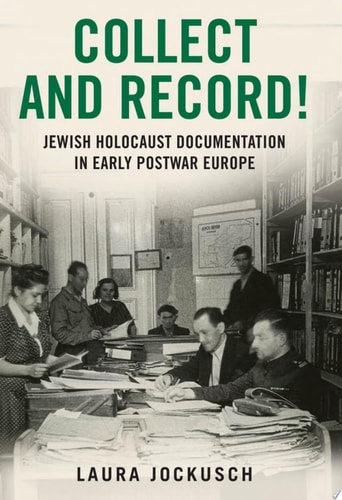
Collect and Record!: Jewish Survivor Historians and the Holocaust
0
0
As an Amazon Associate and affiliate partner, Menrva Books earns from qualifying purchases. Learn more
Author Description
This Book Describes The Vibrant Activity Of Survivors Who Founded Jewish Historical Commissions And Documentation Centers In Europe Immediately After The Second World War. In The First Postwar Decade, These Initiatives Collected Thousands Of Nazi Documents Along With Testimonies, Memoirs, Diaries, Songs, Poems, And Artifacts Of Jewish Victims. They Pioneered In Developing A Holocaust Historiography That Placed The Experiences Of Jews At The Center And Used Both Victim And Perpetrator Sources To Describe The Social, Economic, And Cultural Aspects Of The Everyday Life And Death Of European Jews Under The Nazi Regime. This Book Is The First In-depth Monograph On These Survivor Historians And The Organizations They Created. A Comparative Analysis, It Focuses On France, Poland, Germany, Austria, And Italy, Analyzing The Motivations And Rationales That Guided Survivors In Chronicling The Destruction They Had Witnessed, While Also Discussing Their Research Techniques, Archival Collections, And Historical Publications. It Reflects Growing Attention To Survivor Testimony And To The Active Roles Of Survivors In Rebuilding Their Postwar Lives. It Also Discusses The Role Of Documenting, Testifying, And History Writing In Processes Of Memory Formation, Rehabilitation, And Coping With Trauma. Jockusch Finds That Despite Differences In Background And Wartime Experiences Between The Predominantly Amateur Historians Who Created The Commissions, The Activists Found Documenting The Holocaust To Be A Moral Imperative After The War, The Obligation Of The Dead To The Living, And A Means For The Survivors To Understand And Process Their Recent Trauma And Loss. Furthermore, Historical Documentation Was Vital In The Pursuit Of Postwar Justice And Was Deemed Essential In Counteracting Efforts On The Part Of The Nazis To Erase Their Wartime Crimes. The Survivors Who Created The Historical Commissions Were The First People To Study The Development Of Nazi Policy Towards The Jews And Also To Do
Menrva's Summary
THE THESIS
This book investigates the origins and methodologies of early postwar Jewish historical commissions established by survivors to document the Holocaust. Laura Jockusch, a historian specializing in modern European history, utilizes archival records and primary source testimonies to argue that these survivor-led initiatives were driven by a moral imperative to preserve evidence of Nazi crimes. The work posits that these documentation efforts served as both a tool for postwar justice and a psychological mechanism for survivors to process trauma and reconstruct their identities.
THE SCOPE MAP
What You Will Find
- Comparative analysis of historical commissions in France, Poland, Germany, Austria, and Italy.
- Examination of research techniques, archival collection methods, and early Holocaust historiography.
- Discussion of the intersection between documentation, memory formation, and the pursuit of legal justice.
Scope Limits
- The study focuses primarily on the first postwar decade and the specific organizations created by survivors rather than a comprehensive history of all Holocaust documentation.
THE AUTHORITY PERSPECTIVE
Scholars recognize this work as a significant contribution to the field of Holocaust historiography for its focus on the agency of survivor-historians. Readers frequently note the academic rigor and the detailed archival research that characterizes the author's approach to this historical period.
Page Count:
336
Publication Date:
2015-01-01
Publisher:
Oxford University Press
ISBN-10:
0190259337
ISBN-13:
9780190259334
History
Jewish History
Historiography
Memory Studies
World War
Community Tags
Similar Books