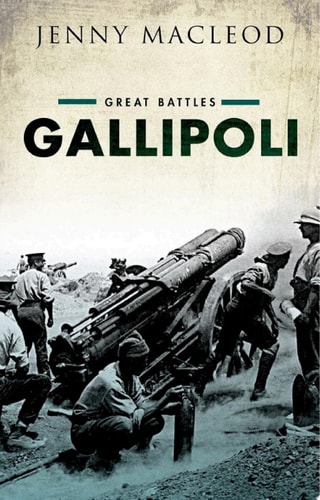
Gallipoli: Great Battles
0
0
As an Amazon Associate and affiliate partner, Menrva Books earns from qualifying purchases. Learn more
Author Description
The British-led Mediterranean Expeditionary Force that attacked the Ottoman Empire at Gallipoli in 1915 was a multi-national affair, including Australian, New Zealand, Irish, French, and Indian soldiers. Ultimately a failure, the campaign ended with the withdrawal of the Allied forces after less than nine months and the unexpected victory of the Ottoman armies and their German allies. In Britain, the campaign led to the removal of Churchill from his post as First Lord of the Admiralty and the abandonment of the plan to attack Germany via its 'soft underbelly' in the East. Thereafter, it was largely forgotten on a national level, commemorated only in specific localities linked to the campaign. In post-war Turkey, by contrast, the memory of Gallipoli played an important role in the formation of a Turkish national identity, celebrating both the ordinary soldier and the genius of the republic's first president, Mustafa Kemal. The campaign served a similarly important formative role in both Australia and New Zealand, where it is commemorated annually on Anzac Day. For the southern Irish, meanwhile, the bitter memory of service for the King in a botched campaign was forgotten for decades. Shaped initially by the imperatives of war-time, and the needs of the grief-stricken and the bereft, the memory of Gallipoli has been re-made time and again over the last century. For the Turks an inspirational victory, for many on the Allied side a glorious and romantic defeat, for others still an episode best forgotten, 'Gallipoli' has meant different things to different people, serving by turns as an occasion of sincere and heartfelt sorrow, an opportunity for separatist and feminist protest, and a formative influence in the forging of national identities.
Menrva's Summary
THE THESIS
How has the memory of the Gallipoli campaign been constructed, contested, and utilized by different nations over the last century? Jenny Macleod, a historian specializing in the cultural history of the First World War, examines the divergent ways the 1915 campaign is remembered in Britain, Turkey, Australia, New Zealand, and Ireland. She argues that the campaign's legacy is not a static historical fact but a malleable narrative shaped by national identity, political necessity, and the evolving needs of the bereaved.
THE SCOPE MAP
What You Will Find
- Comparative analysis of national memory in Turkey, Britain, and the ANZAC nations
- Examination of the political fallout for Winston Churchill and British military strategy
- Exploration of how the campaign influenced the formation of Turkish national identity
- Discussion of the role of Anzac Day and other commemorative practices
Scope Limits
- Does not provide a minute-by-minute tactical account of the military engagements
- Focuses primarily on the post-war cultural legacy rather than the internal logistics of the Ottoman or Allied command structures
THE AUTHORITY PERSPECTIVE
Experts recognize this work as a significant contribution to the study of war memory and national identity. Readers frequently note the clarity of the prose and the author's ability to synthesize complex international perspectives into a cohesive historical argument.
Page Count:
275
Publication Date:
2015-01-01
Publisher:
OUP Oxford
ISBN-10:
0191035238
ISBN-13:
9780191035234
History
Historiography
Military History
World War
Cultural History
Community Tags
Similar Books