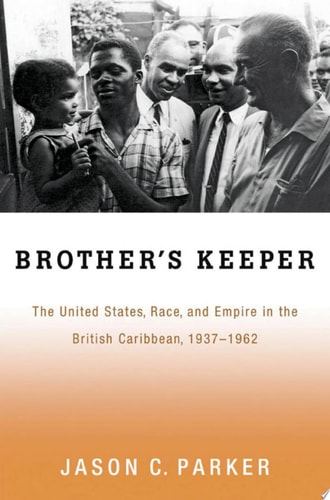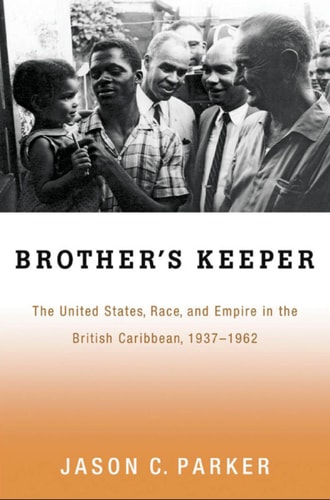
Brother's Keeper: The United States, Race, and Empire in the British Caribbean, 1937-1962
0
0
As an Amazon Associate and affiliate partner, Menrva Books earns from qualifying purchases. Learn more
Author Description
In 1962, amidst the Cuban Revolution, Third World decolonization, and the African American freedom movement, Jamaica and Trinidad and Tobago became the first British West Indian colonies to gain independence. These were not only the first new nations in the western hemisphere in more than fifty years; they also won their independence without the bloodshed that marked so much of the decolonization struggle elsewhere. Jason Parker's international history of the peaceful transition in these islands analyzes the roles of the United States, Britain, the West Indies, and the transnational African diaspora in the process, from its 1930s stirrings to its Cold War culmination. Grounded in exhaustive research conducted in seven countries, Brother's Keeper offers an original rethinking of the relationship between the Cold War and Third World decolonization.
Menrva's Summary
THE THESIS
This book investigates how the United States influenced the peaceful decolonization of Jamaica and Trinidad and Tobago between 1937 and 1962. Jason C. Parker, a historian specializing in international relations, utilizes a multi-archival approach to examine the intersection of Cold War geopolitics, racial dynamics, and the African diaspora. He argues that the transition to independence in these British colonies was shaped by a complex interplay of American foreign policy, British imperial decline, and local nationalist movements.
THE SCOPE MAP
What You Will Find
- Analysis of the transition from British colonial rule to independence in Jamaica and Trinidad and Tobago.
- Examination of the influence of the African American freedom movement on Caribbean political consciousness.
- Investigation into the role of the United States in managing regional stability during the Cold War.
- Primary source research conducted across seven countries including the U.S., Britain, and Caribbean nations.
Scope Limits
- The study focuses primarily on the diplomatic and political history of the transition rather than the internal social history of the islands.
- The narrative concludes in 1962 and does not address the long-term post-independence political trajectories of the nations.
THE AUTHORITY PERSPECTIVE
Historians and scholars of the Caribbean regard this work as a significant contribution to the study of mid-twentieth-century international relations. Readers frequently note the academic density of the prose and the depth of the archival research presented.
Page Count:
262
Publication Date:
2008-01-01
Publisher:
Oxford University Press
ISBN-10:
0190450290
ISBN-13:
9780190450298
History
Caribbean History
Cold War
International relations
Decolonization
West Indies
American History
Community Tags
Other Editions(2)

Similar Books