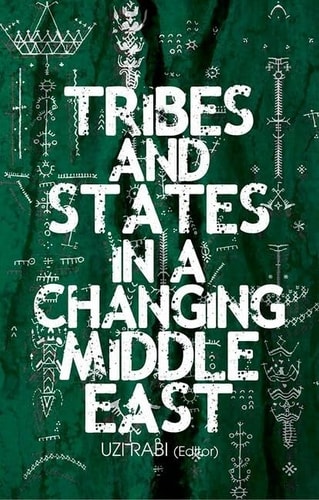
Tribes and States in a Changing Middle East
0
0
As an Amazon Associate and affiliate partner, Menrva Books earns from qualifying purchases. Learn more
Author Description
At the outset of the twenty-first century and in the midst of the Arab Spring, tribe-state relations are a useful frame of reference through which to analyze the Middle East on a state-by-state basis. Tribes and States in a Changing Middle East looks beyond the dichotomy between tribe and state. Its central theme is the role of tribes and tribalism in state politics, society, and identity, as demonstrated in case studies from the Arab East (mashriq). The book is a comparative endeavour that seeks to address questions related to the interplay between tribal organizations and state institutions, tribal solidarity and nationalism, and tribal power and the centralized government. It further discusses the impact and role of tribal polities in modern states in times of regional and national turmoil.
Menrva's Summary
THE THESIS
This book investigates how tribal structures and state institutions interact to shape political stability and social identity in the modern Middle East. Uzi Rabi, a scholar specializing in Middle Eastern history and politics, utilizes a comparative framework to analyze the persistence of tribalism within the context of the Arab Spring. The text argues that the traditional dichotomy between tribe and state is insufficient for understanding regional dynamics, proposing instead that tribalism remains a fundamental component of statecraft and national identity.
THE SCOPE MAP
What You Will Find
- Comparative analysis of tribe-state relations across the Arab East (mashriq)
- Examination of tribal solidarity versus national identity
- Assessment of tribal influence on centralized government power
- Case studies focusing on regional turmoil and political transition
Scope Limits
- The analysis is primarily restricted to the Arab East (mashriq) and does not provide exhaustive coverage of North African tribal dynamics.
THE AUTHORITY PERSPECTIVE
Experts recognize this work as a significant contribution to the study of political sociology in the Middle East. Readers frequently note the academic density of the prose, which is well-suited for students and researchers of regional politics.
Page Count:
288
Publication Date:
2016-06-01
Publisher:
Oxford University Press
ISBN-10:
0190264926
ISBN-13:
9780190264925
History
Middle East
Middle Eastern
International relations
Sociology
Group Identity
Tribes
Community Tags
Other Editions(3)

Similar Books