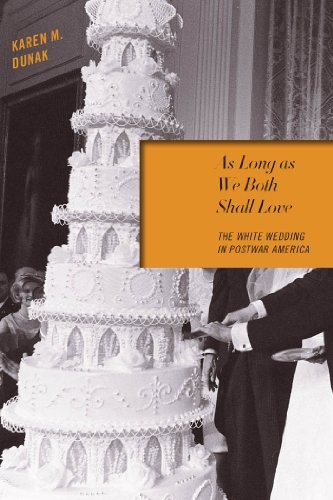
As Long as We Both Shall Love: The White Wedding in Postwar America
0
0
As an Amazon Associate and affiliate partner, Menrva Books earns from qualifying purchases. Learn more
Author Description
When Kate Middleton married Prince William in 2011, hundreds of millions of viewers watched the Alexander McQueen-clad bride and uniformed groom exchange vows before the Archbishop of Canterbury in Westminster Abbey. The wedding followed a familiar formula: ritual, vows, reception, and a white gown for the bride. Commonly known as a white wedding, the formula is firmly ensconced in popular culture, with movies like Father of the Bride or Bride Wars, shows like Say Yes to the Dress and Bridezillas, and live broadcast royal or reality-TV weddings garnering millions of viewers each year. Despite being condemned by some critics as "cookie-cutter" or conformist, the wedding has in fact progressively allowed for social, cultural, and political challenges to understandings of sex, gender, marriage, and citizenship, thereby providing an ideal site for historical inquiry. As Long as We Both Shall Love establishes that the evolution of the American white wedding emerges from our nation's proclivity towards privacy and the individual, as well as the increasingly egalitarian relationships between men and women in the decades following World War II. Blending cultural analysis of film, fiction, advertising, and prescriptive literature with personal views expressed in letters, diaries, essays, and oral histories, author Karen M. Dunak engages ways in which the modern wedding emblemizes a diverse and consumerist culture and aims to reveal an ongoing debate about the power of peer culture, media, and the marketplace in America. Rather than celebrating wedding traditions as they "used to be" and critiquing contemporary celebrations for their lavish leanings, this text provides a nuanced history of the American wedding and its celebrants.
Menrva's Summary
THE THESIS
The white wedding in postwar America, far from being a static tradition, has served as a dynamic site for evolving understandings of gender, citizenship, and consumer culture. This book establishes that the American white wedding's development is rooted in the nation's emphasis on privacy and individualism, alongside the growing egalitarianism in male-female relationships after World War II. By analyzing cultural artifacts such as film, fiction, advertising, and prescriptive literature, alongside personal accounts from letters, diaries, essays, and oral histories, Karen M. Dunak explores how the modern wedding reflects a diverse and consumerist society. The work aims to uncover the ongoing dialogue surrounding the influence of peer culture, media, and the marketplace on American weddings, offering a nuanced history rather than a simple celebration or critique of tradition.
THE SCOPE MAP
- Analysis of the evolution of the American white wedding from the post-World War II era.
- Examination of the influence of privacy, individualism, and egalitarian relationships on wedding traditions.
- Cultural analysis of film, fiction, advertising, and prescriptive literature related to weddings.
- Inclusion of personal perspectives from letters, diaries, essays, and oral histories.
- Exploration of the wedding as an emblem of diverse and consumerist culture.
- Investigation into the ongoing debate about the power of peer culture, media, and the marketplace in shaping weddings.
- A nuanced historical perspective that avoids simply celebrating past traditions or critiquing contemporary excess.
THE AUTHORITY PERSPECTIVE
This book offers a nuanced historical examination of the American white wedding, tracing its evolution in the decades following World War II. It analyzes how cultural forces like privacy, individualism, and changing gender dynamics shaped wedding traditions, drawing on a wide array of sources from popular culture to personal accounts. The work is positioned as a scholarly exploration that moves beyond simple nostalgia or critique to understand the complex social and cultural significance of the wedding ceremony in America.
Page Count:
254
Publication Date:
2013-01-01
ISBN-10:
0814737811
ISBN-13:
9780814737811
History
Non-Fiction
Social History
Gender Studies
American Studies
Cultural History
Community Tags
Similar Books