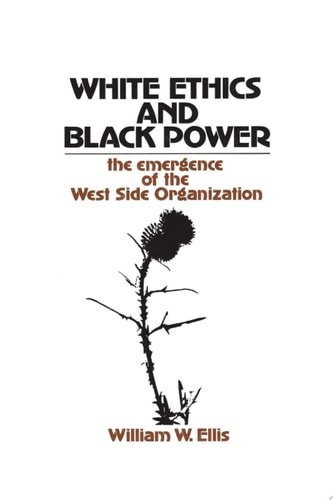
White Ethics and Black Power
0
0
As an Amazon Associate and affiliate partner, Menrva Books earns from qualifying purchases. Learn more
Author Description
The disparity between the ideal, a democratic America, and the reality, racial oppression and poverty, is so great that serious voices among blacks, students, and others challenged the ethical foundations of the nation in the 1960s. Local political organizations emerging out of black ghettos led a black revolt, asserting a revolutionary black nationalism rather than social reform and integration. For those blacks, white America could no longer dictate right and wrong, and certainly could no longer tell blacks how best to pursue their goals. This feeling was so strong among the adherents of the new militant movements formed under the political symbolism of "black power" that they questioned all white ethical institutions. These new movements bargained and contended with whites, even worked closely with them for many purposes, but always with suspicion and caution.White Ethics and Black Power describes racial relations during this period. It examines the careers and philosophies of the leadership of a community organization, illuminating the complex relationship between white America and the new black power movements, between America and its interpretation of itself on the one hand, and the experience of black and oppressed peoples in America on the other. Redefining social science as a means--through education and research--of improving the quality of American life, William Ellis derides non-participatory social science as a hoax and asks the social scientist to make clear his moral commitment: to the people he studies or to the establishment that funds him.Controversial in its ideology, its passion, and its scorn of racist America, this volume remains the only openly partisan social scientific analysis into the nature of this American crisis. Readers may not agree with the views expressed by the author, but they cannot ignore this book's relevance to any understanding of black-white relationships. Unique in the literature, White Ethics and Black Power not only expla
Menrva's Summary
THE THESIS
This work investigates the ethical contradictions inherent in American racial relations during the 1960s, specifically questioning the legitimacy of white-dominated institutions in the face of the black power movement. William W. Ellis, a social scientist, challenges the traditional objective stance of academic research by advocating for an openly partisan approach that prioritizes the lived experiences of oppressed communities. He argues that social science must serve as a tool for societal improvement rather than a neutral observer, demanding that researchers declare their moral commitments to either the establishment or the people they study.
THE SCOPE MAP
What You Will Find
- Analysis of the political philosophies and leadership structures of 1960s black community organizations.
- A critique of traditional social science methodologies and their perceived detachment from social reality.
- Examination of the tension between integrationist social reform and the rise of black nationalism.
- Case studies on the interactions between white institutional power and militant black political movements.
THE AUTHORITY PERSPECTIVE
Experts recognize this text as a provocative and highly partisan contribution to the literature on racial politics and social science methodology. Readers frequently note the intense, polemical tone of the prose, which distinguishes it from more conventional academic studies of the era.
Page Count:
354
Publication Date:
1991-03-05
Publisher:
University of Chicago Press
ISBN-10:
0202362892
ISBN-13:
9780202362892
History
Race Relations
Social justice
Sociology
African Americans
Community Tags
Other Editions(2)
Similar Books
Reader Comments
Share Your Thoughts
No comments yet. Be the first to share your thoughts!